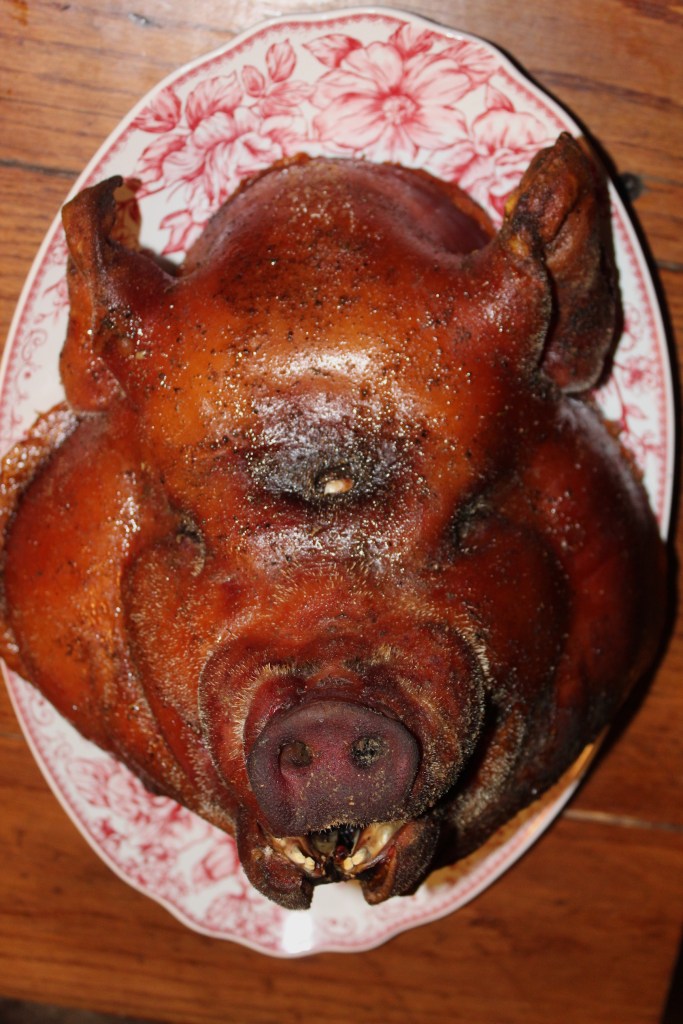
This year, we didn’t raise any pigs for slaughter, but we have for a number of years. Each year, I have tried to push myself a little further to learn how to process yet another portion of the animal. One of the difficult things about learning to slaughter our own animals has been learning to use as much of the animal as possible. Blood in the gardens, bones to make broth, offal to feed animals… but there are often parts we are “warned” against using, and we are left to find suitable methods of disposal. In truth, nothing really goes to waste, but it’s nice to be intentional. Last year, for the feast of St. Martin of Tours, also known as Martinmas, I decided I would learn how to roast a pig’s head. I’d heard great things about this portion of the animal, but until that point, hadn’t been able to bring myself to cook the whole thing. I admit that it’s not exactly the most appetizing of cuts. And yet… the pig’s head (or boar’s head) has historically been feast-day fare.
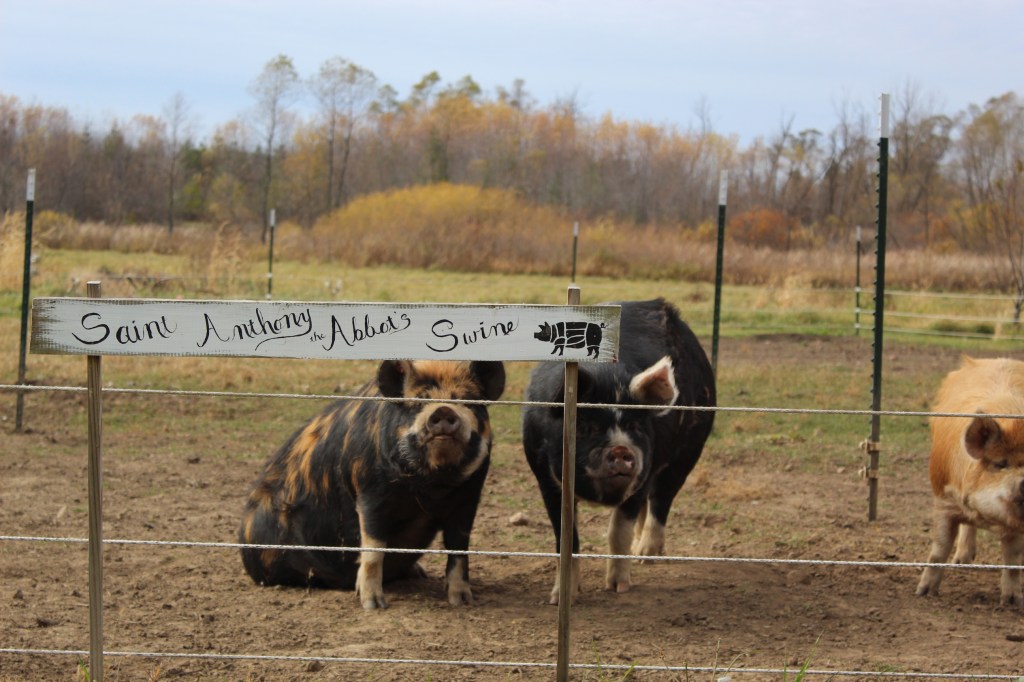
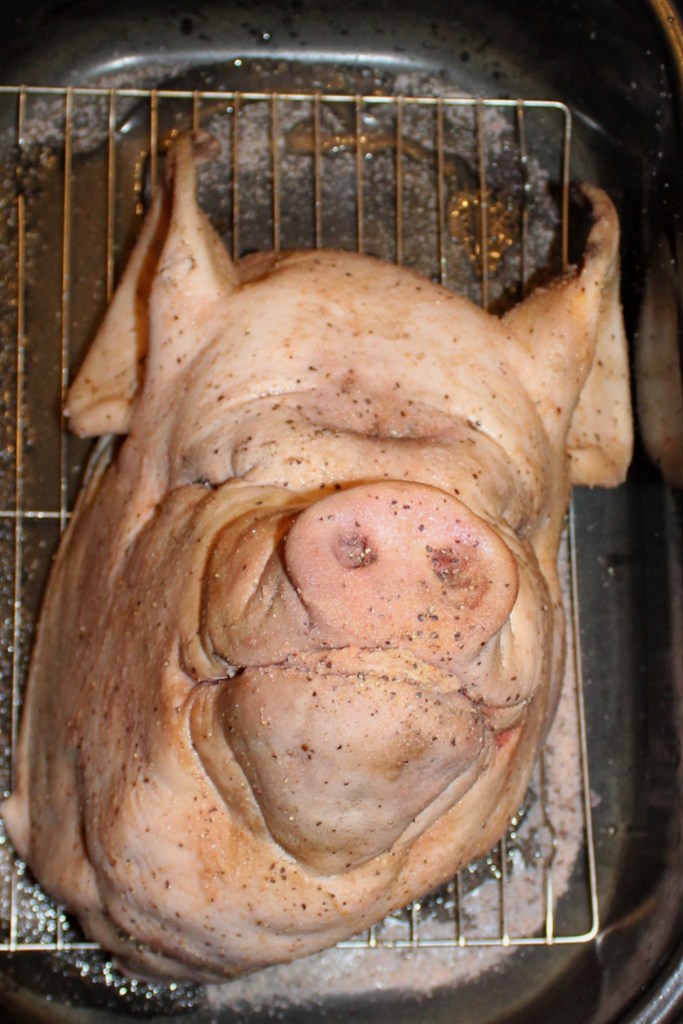
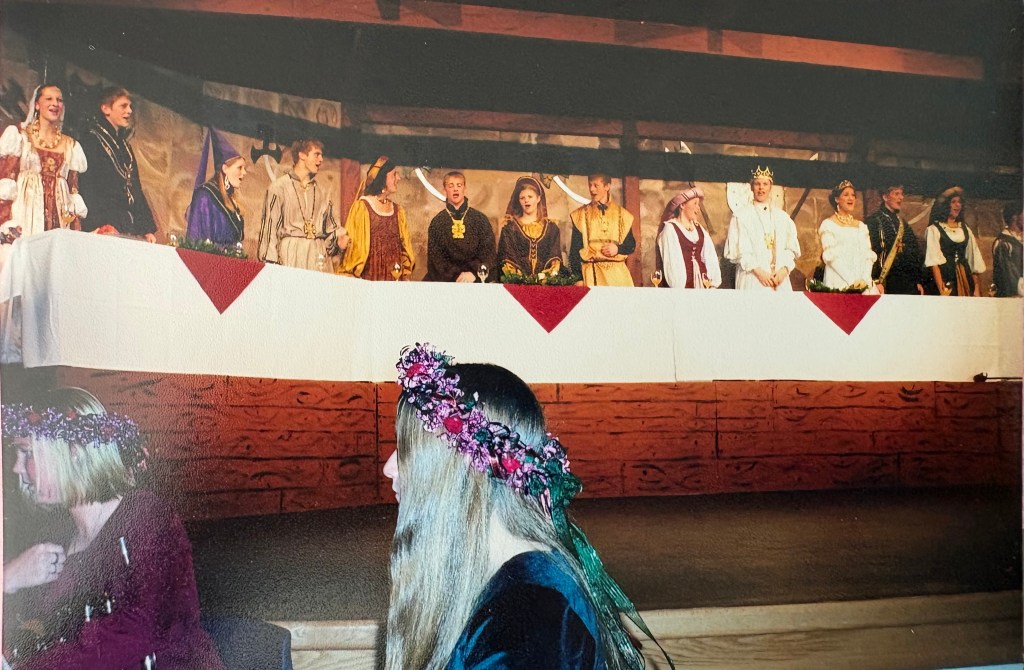
My first introduction to the concept was in high school when I partook in the Madrigal production, and we sang the “Boar’s Head Carol.” At the time, I remember thinking it was such an odd thing. The only meat I was accustomed to eating came in Styrofoam packaging, wrapped in plastic wrap, and we typically ate ground beef for meat growing up. (It was a different story for my husband.) Even the idea of butchering my own meat was something I was squeamish about… I distinctly remember cooking a meal for my future husband, and cutting apart a whole chicken, and being absolutely terrified at the feeling of cutting apart the limbs from the raw chicken. So the jump from that to deciding to cook a whole pig’s head was quite a leap! Raising our own animals changed all of that, however. I’d heard good things about this cut of meat, and so eventually, I decided I was brave enough to give it a go! I will admit up front that the family and our friends were all a bit squeamish about it, but the meat was indeed delicious. I’m actually finding myself a little sad that this year, we won’t have one to cook up!
300F for 5 hrs, 475 for 1hr.
- Pig head
- Vinegar
- Salt
- Pepper
The pig’s head is ideally prepared a day or two in advance, but could be cooked on butchering day, if you are feeling ambitious. (Remember: some people may not want to eat pork on the day you slaughter the pigs!) The directions below are for cooking the head at least a day after slaughter, and it is an all-day process to cook it low and slow, so be sure to start early enough!
The skin needs to be clean (free of hair, and scrubbed if necessary). The head would be scraped at the time the rest of the body is scraped on slaughter day. For hairier pigs, you may need to use a torch to help remove additional hairs, but be careful not to cook it! Scrape thoroughly again after burning off any hair. A very sharp knife can help to shave off any remaining hairs. There may still be a bit of stubble, but that’s okay. If the pig was shot in the head for slaughter, be sure to remove the bullet (this can be accessed through the neck side of the head). You do not need to remove the tongue or eyes for cooking, though you can if you wish. Pat dry.
Once the head is clean and dry, rub with vinegar.
The head should be salted and peppered. Be generous with the salt, and rub it all over the head. Salt helps to extract moisture from the skin, which will help it to get nice and crispy while cooking. You can use additional seasonings to give more flavor, if you wish. Let sit in the refrigerator overnight.
Preheat the oven to 225F.
Pat head dry again. Place on a rack inside a pan or dish in the refrigerator. Placing it on a rack allows moisture to drip away without it sitting in pooled liquid.
If you have two oven racks, one will likely need to be removed, and the other put at the lowest level. Cook for about 5 hours. (Cook times are based on a 15 lb. head. You may need to adjust accordingly. If you need a longer cook time, increase cook time on the lowest temperature setting.)
Increase oven temp to 325F, and cook for about 2 hours.
Adjust oven temp to 425F, and continue cooking for about 30 minutes.
Let rest for about 30 minutes before serving. The meat tastes like any other pork, and is cooked in a good deal of fat, making it nice and juicy. It is very tender. Any meat remaining after the meal can be picked off and used for another meal, such as pulled pork sandwiches in the days that follow.
Note that if the mouth was closed at the time you put the head in the oven, it will likely open up a bit throughout the cooking process.
If you’ve ever cooked a pig’s head, I’d love to hear what your thoughts are, and if you decide to cook one, let me know how it turned out in the comments!
In Christ, Danielle
The Boar’s Head Carol
The boar’s head in hand bear I,
Bedecked with bays and rosemary,
And I pray you, my masters, be merry,
Quot estis in convivio.Refrain:
Caput apri defero,
Reddens laudes Domino.The boar’s head, as I understand,
Is the bravest dish in all the land,
Which, thus bedecked with a gay garland,
Let us servire cantico.
(Refrain:)Our steward hath provided this,
in honour of the King of bliss,
which on this day to be servèd is
in Reginensi Atrio.
(Refrain:)


Leave a Reply