The minor Rogation Days are days of supplication to God for favorable weather and the blessing of the land and of crops. Observed the Monday, Tuesday, and Wednesday prior to Ascension Thursday, these are days of prayer, penance, and processions. Dating back to the 5th century, they began in Christian communities as a plea to God for mercy after a series of great calamities such as fire, earthquakes, wolf attacks, and pestilence happened within a short span of time. The issues ceased after the series of processions, along with prayer, and fasting for three days, and the custom was adopted by surrounding bishops, and by the 9th century, the whole of Christendom.
Though one could argue as to whether there is any longer a need to partake in these ancient practices, since the calamities faced have long since passed, it is not difficult to consider that there are many evils that plague this world and attack the natural environment on which we rely for sustenance and life. Polluted land and waters, concerns over certain animal populations, and generally poor practices concerning the care of land and animals by some parties are just some of the issues we face today. And of course, natural disasters are always a continual threat, and weather is something which we cannot control. Prayer, we are told by Scripture, is strengthened in fasting. In reference to casting out demons, Jesus says in Matthew 17:21 that “this kind cannot be cast out except by prayer and fasting.” Now, natural disasters may not be within our control, but many of the concerns about the state of our environment are greatly impacted by the acts of mankind. Some are caused by selfishness and greed, and others by ignorance, but there can be no doubt that the enemy wishes to attack all that is good, all that benefits mankind, and all that is of God, and if that can be done through the work of human hands, all the better (according to the enemy).
The word “rogation” is derived from the Latin “rogare” or “rogatio” which means “to ask.” Throughout the minor Rogation Days and the Major Rogation Day, we call upon God to bless the work of our hands, the fruit of the land, the land itself, even the weather, and we ask for a bountiful harvest. We also beg His protection from natural disasters. Praying, as with anything we do as Christians, is central to this practice. To fast or process without prayers would be meaningless and fruitless.
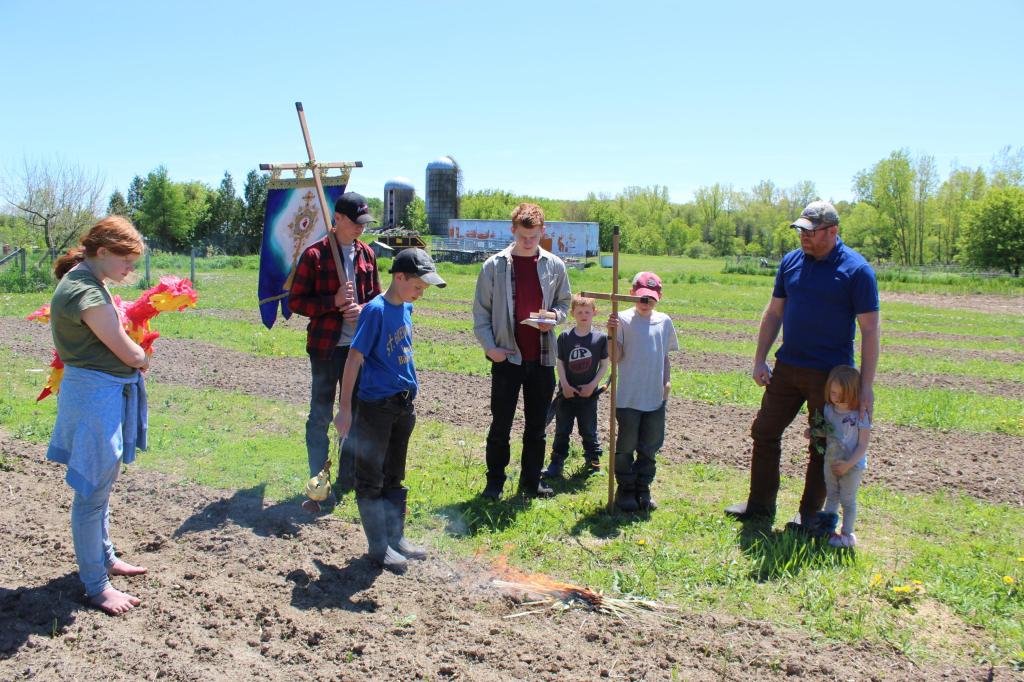
The practice of processions is quite ancient and dates much further back than Christianity, but they have always been a part of Christian practice. Processions have long been a way of celebrating, mourning, and worshipping. Funeral processions, Eucharistic processions, and Passion processions, are just a few of the long-practiced processions of Catholics. As Christians, we are all hopefully mindful of the rather important nature of processions in recalling the story of Joshua and the Israelites at Jericho (Ex. 5 and 6). God gave strict orders to Joshua that the people must march around Jericho silently for 6 days, once each day, while the priests blew their trumpets and carried the ark. On the seventh day, they circled the city 6 times in the same manner, and then circled a 7th time, shouting while the trumpets blasted, and the wall of the city collapsed. While our processions today are not of the same nature as at Jericho, we can learn much from that story. The processions of the ark are forerunners of our Eucharistic processions today.
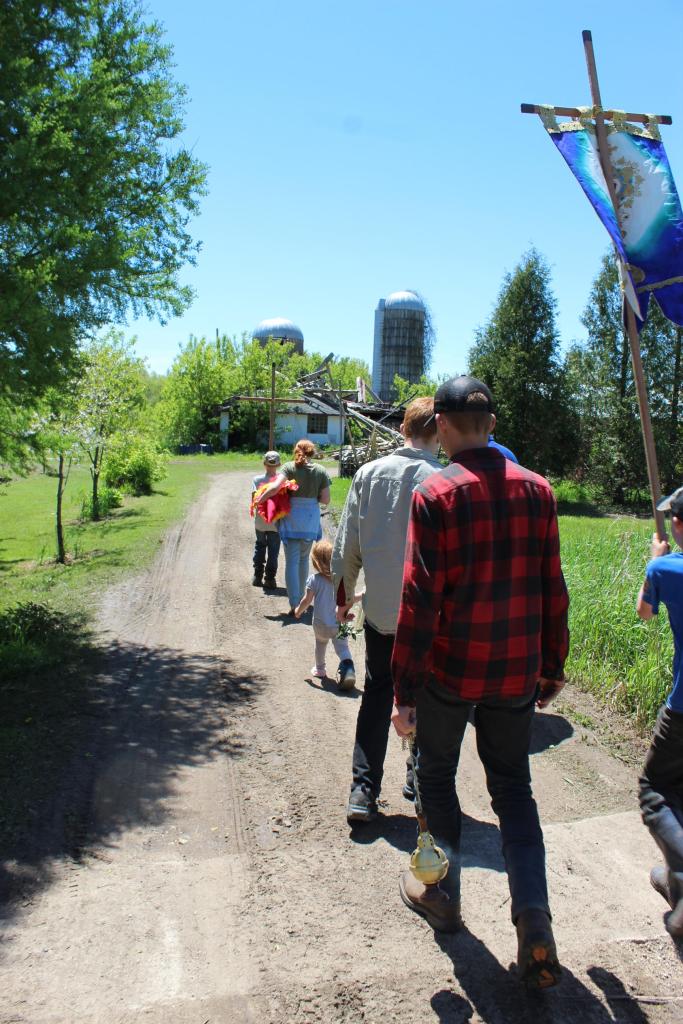
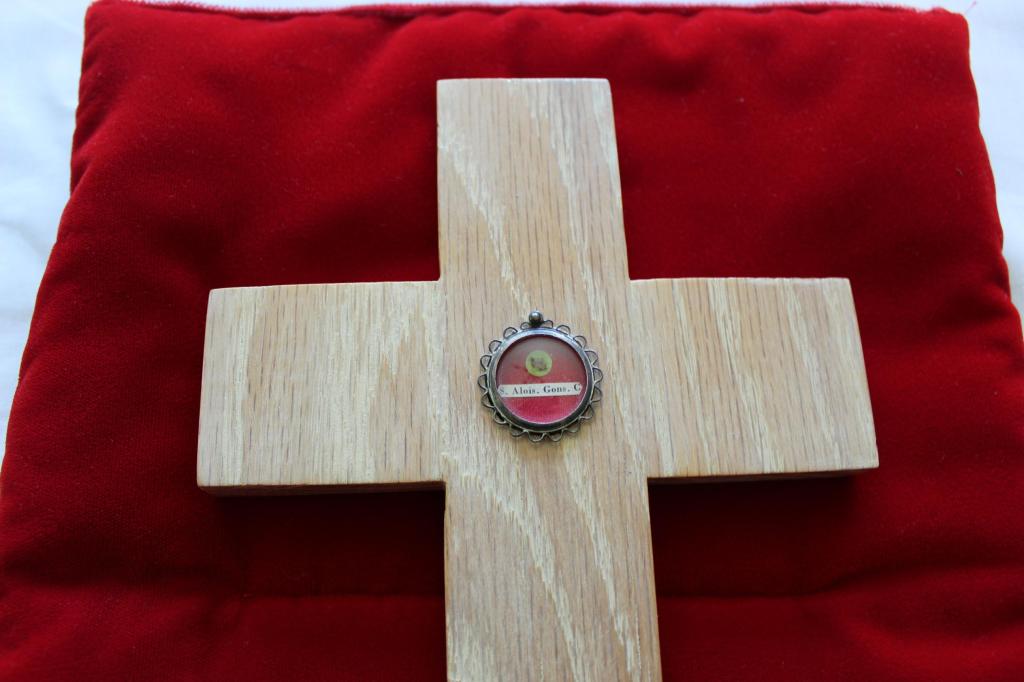
As for Rogation processions, there is still much symbolism. Some of the elements drawn in, such as carrying relics, ringing bells (or blowing horns), are reminiscent of that procession of Jericho. We do not walk boundaries in order that God might destroy what lies inside, but rather that He might protect and bless it. We don’t march for 7 days, which would signify the 7 days of Creation among other things, but rather for 3 days, which of course, calls to mind the Blessed Trinity. Holy water reminds us of our baptism and is a sign of God’s blessing, banners signify joy and Christ’s triumphant victory, and in praying we ask God to be present with us. We do not shout for what is to be conquered, but we sing for what has been conquered.
There are actually, technically 4 Rogation days, though they are not all celebrated together. The Major Rogation Day is celebrated every April 25th, which is more commonly known today as the feast day of St. Mark the Evangelist, and is said in some sources to be the more ancient. Though it appears unclear from my research which is truly more ancient, I would speculate that the term “Major” refers to it being practiced first, and “minor” would refer to a later implementation. Separated into two observances, we can see a grouping of 1 and 3, significant in that it calls to mind that there is One God, Three Persons.
There is much that can be said about these blessed days, and I have written on them previously. To learn more about the Rogation Days and how our family has celebrated in the past, you can read more here and here. There is additional information to be found elsewhere online, so I encourage you to do more research afterwards if you are still inclined to learn even more.
In Christ,
Danielle
 The Liturgical Homestead
Leave a comment