
“Hermitage” is probably not the first word that comes to mind when one thinks of building up a homestead. A hermitage brings to mind a life of quiet contemplation and seclusion, not necessarily chickens and gardens. Yet there are many homesteaders that embark on a journey that falls along these lines, a life of seclusion and living off the land. The motives for living this way may vary from person to person, with some being more desirous of a life of contemplation, and others wanting to get away from the toxicity that exists in much of the secular world. While I think that it is possible for some to create a hermitage that is also a homestead, I believe what would be more realistic is for homesteads that have the space and resources to create “hermitages” or retreat spaces on their land, for the use of the members of the homestead or whomever they would be willing to open the space to. A homestead might just be the perfect place for a hermitage, poustinia, or retreat space, as homesteads tend to be a quiet, peaceful nature about them.
The western notion of “hermitage” and the eastern notion of “poustinia” are similar, and yet different. The hermit is often associated with a particular monastery, while the poustinik is not connected to a monastery but the community at large in which he lives. The hermit may live a semi-secluded life in connection to the monastery, whereas the poustinik is available to serve the needs of neighbors. Hermit or poustinik, the people who live this life set out with the same goal- a life of contemplation and prayer, to grow closer to God and pray for the world around them. Fasting is frequently a part of this journey, and it is a life of simplicity Both men and women can be a hermit or poustinik, though we more commonly think of men as living this way.
For about a decade after we purchased our homestead, I had a longing to build an off-grid cabin on our property. A place of retreat and prayer. It could also double as a guest space for friends visiting from out of the area, should they so desire to stay there. We bought our property for many reasons, one of which was to get away from the noise of society and “normal” life. Yet, neither homeschooling or having a large family provide much time for solitude, contemplation, and quiet. We have a decent-sized property with trails that run throughout it, and when I get particularly overwhelmed by life, I take a walk to clear my head and pray, but rain or cold or deerflies can sometimes interfere with the ability to get that quiet time. Every spring, the urge to build a cabin would return, but every year, we’d have to put it off for lack of time or resources. Finally, after ten years of waiting and praying, we decided it was time to make the dream a reality.
For all the years we’ve been homesteading, we’ve done nearly everything ourselves, including most home repairs, vehicle maintenance, building projects, and more. This was part of what held us back from building a cabin sooner. We needed time and the resources, but these things were lacking, particularly time. As spring rolled around once again, the urge to build the cabin came back stronger than ever. One day, while driving into town to run errands, I passed one of those roadside plots with all of the little pre-fab sheds were being sold, and it struck me that perhaps one of these would make a perfect cabin. I stopped, looked around, and started collecting pricing sheets. It would still need work to be used the way we wanted, but it would quickly set us up with a little retreat space without having to spend a whole summer or more on the project. I shared the idea with my husband and we decided to do some further digging, and within a few weeks, the cabin we wanted was ordered. We just had to wait six weeks and prepare the ground!
I have to say, this project wouldn’t have been possible years ago. We did not have the resources (not just money, but tools and equipment) to make it happen. And frankly, it was only able to happen because God has provided for us in many unexpected ways throughout the years. As we were trying to decide if we should buy one of these buildings, I was doing a lot of praying. I felt guilty for spending such a large sum of money on something that I wanted, and I felt guilty for desiring to have space and quiet. I LOVE my family and wouldn’t trade this life for anything. One day, I prayed in a bit of desperation, “Lord, I don’t want to feel like I want to be a hermit!” (Referring to my desire to have time alone or experience quiet.) And in the still quiet that followed, I heard the word “hermitage” and immediately realized that this concept is not the bad thing we make it out to be. A hermit of faith is not the same as a secular hermit. The more I thought and prayed over this, the more I recognized how consistently the Church has encouraged times of retreat for the faithful. Retreat can come in all different forms, from silent ones to ones filled with presentation and group prayer, ones of solitude, and ones in community.
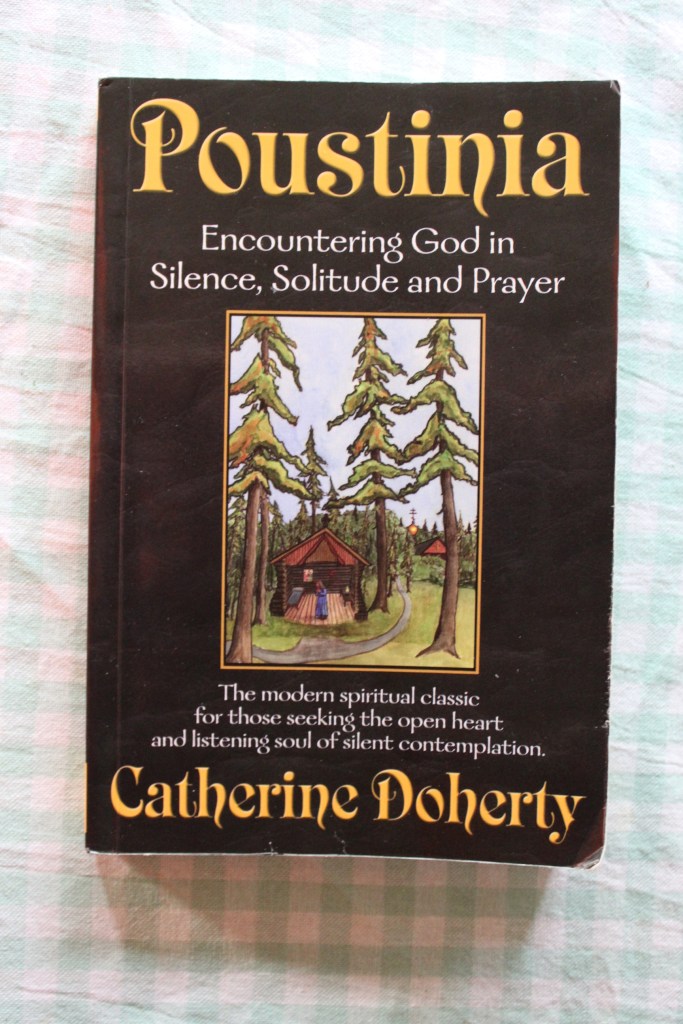
It was about this time during my prayer that a friend, a Byzantine Catholic monk, encouraged me to read “Poustinia” by Servant of God, Catherine Dougherty. This book gave me lots to think about. I love the idea of poustinia, and yet, I knew it wasn’t exactly what I was being called to. Still, it provided plenty of inspiration. After we ordered the cabin and started telling family and friends, we started to hear feedback on how it should be used, which was a little challenging for me to sift through, and at times more challenging to explain what this thing was really all about. Not a she-shed, not a chapel, not a “love nest”, nor a place to “hang out,” and yet it wasn’t a poustinia in the sense that Catherine talks about, with the complete simplicity which she advocates.
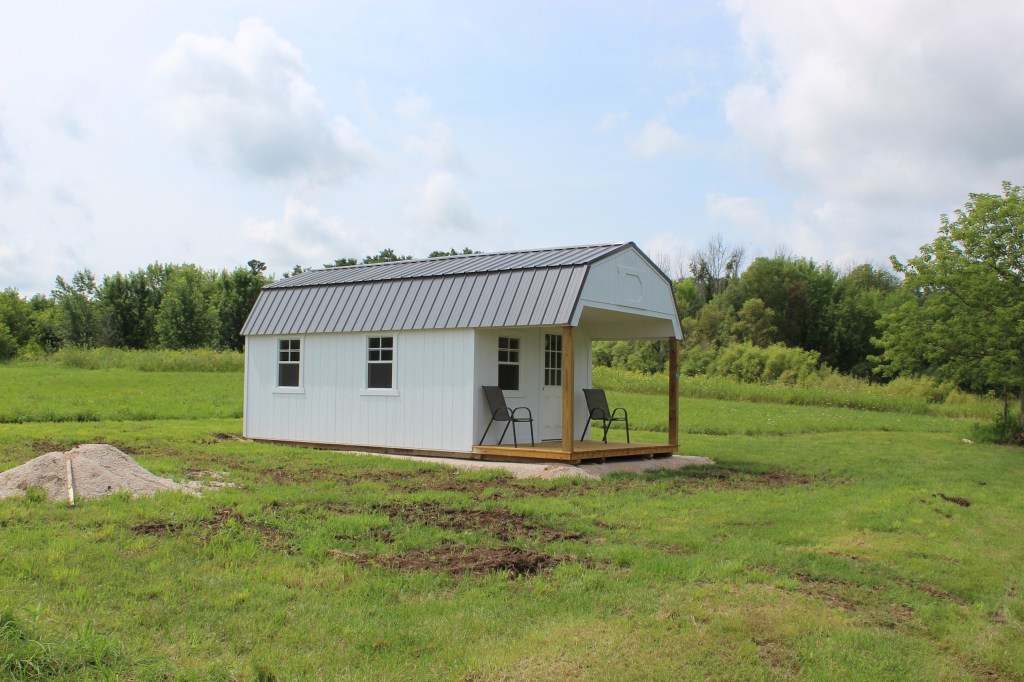
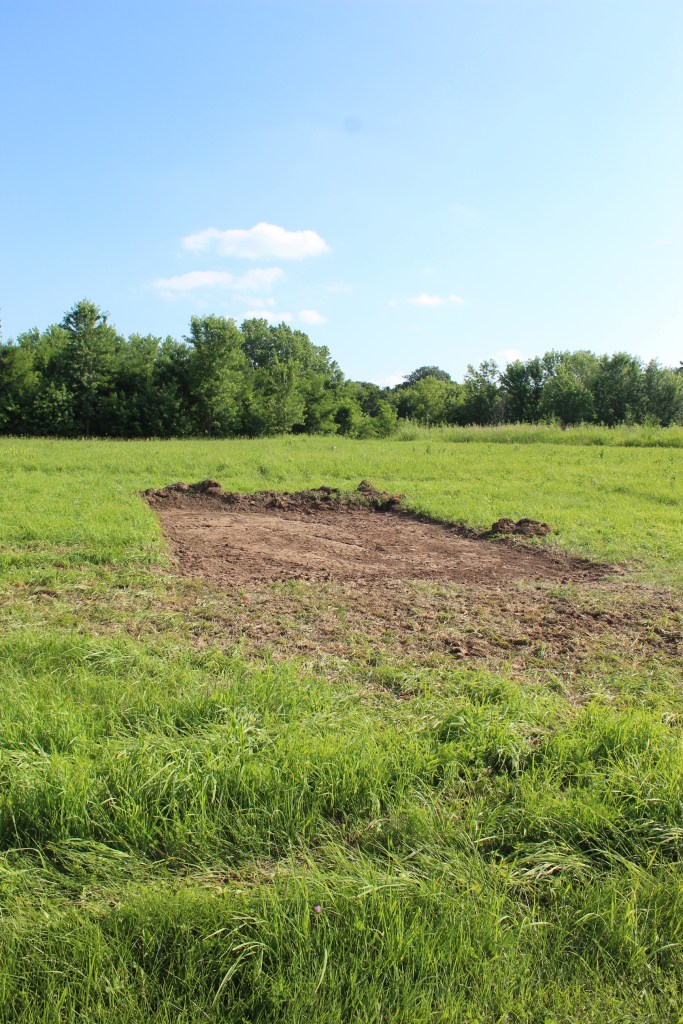
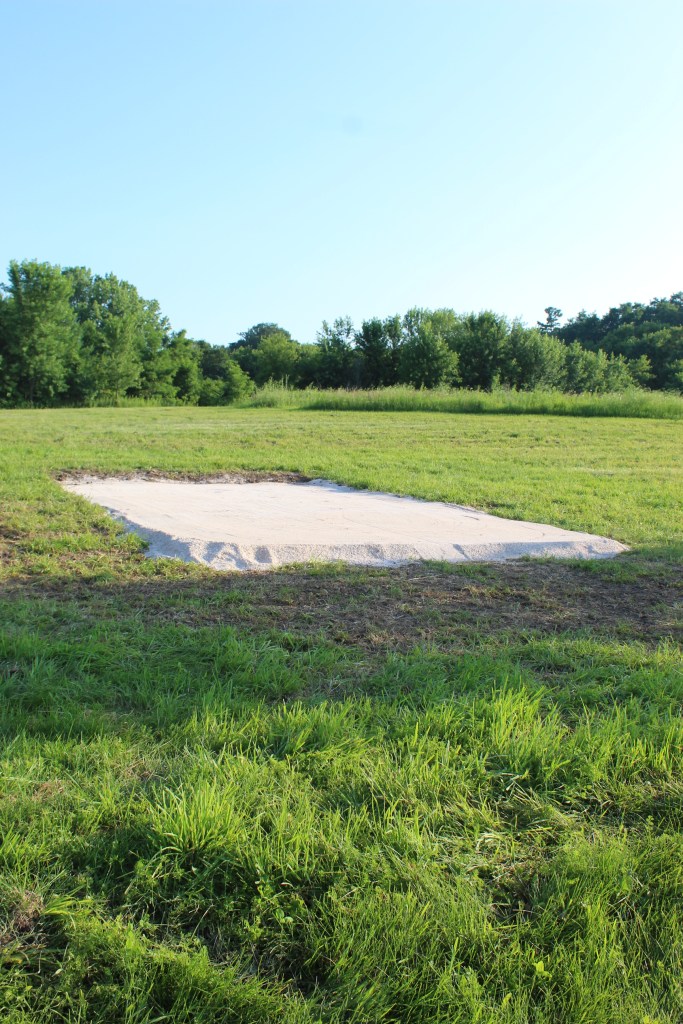
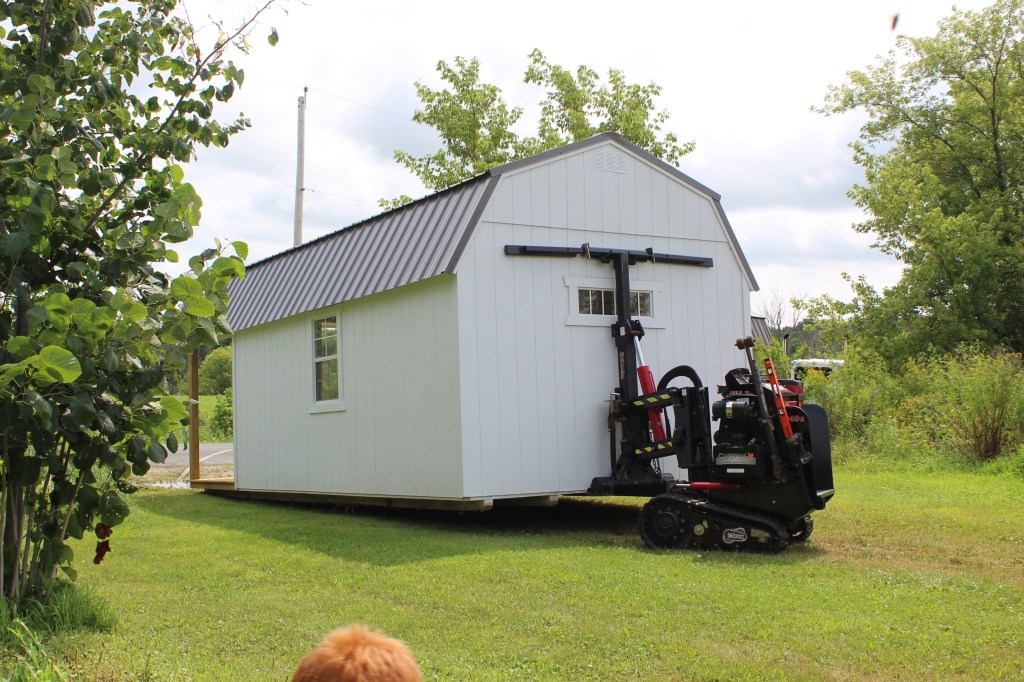
I decided not to fret about the definition and focus on prayer and getting everything established. It took plenty of work. The building we ordered was actually considered a “playhouse”, and we were able to customize things like the number of windows, whether it had a loft, how big the loft was, and the dimensions of the overall structure. It took about 6 weeks from the time we ordered, until it was built, and waited another two weeks for an available delivery date. While we waited, the ground was scraped and leveled, a gravel pad put in, and everything was compacted with a plate compactor. The building was delivered on a long semi-truck, and the delivery driver unloaded the shed and moved it into place using a little building mover, which is sort of like a little forklift with skids.
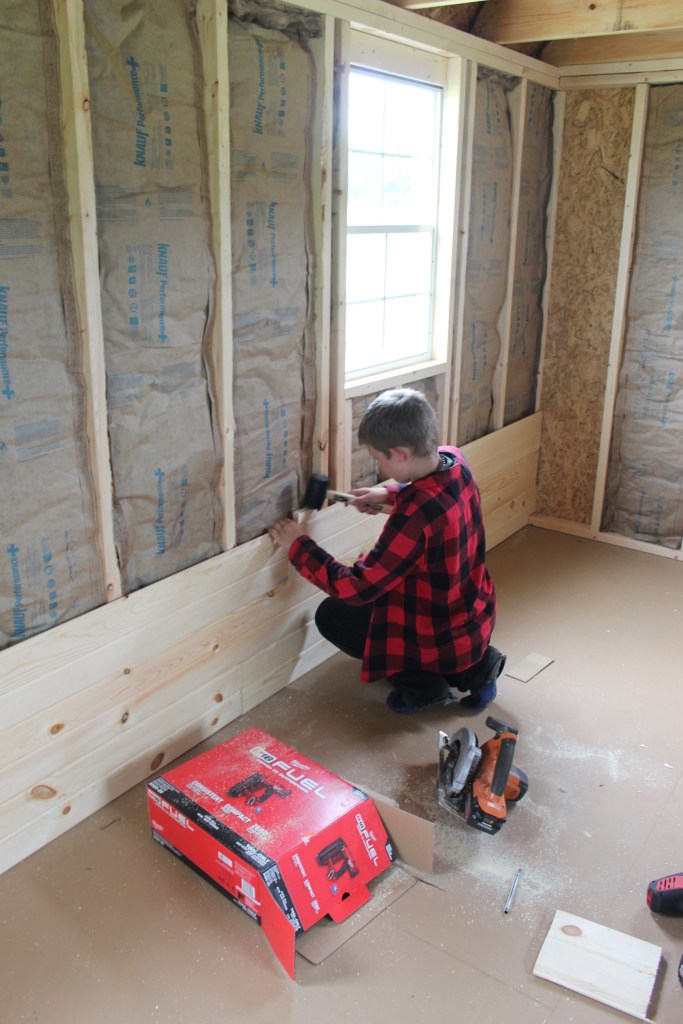
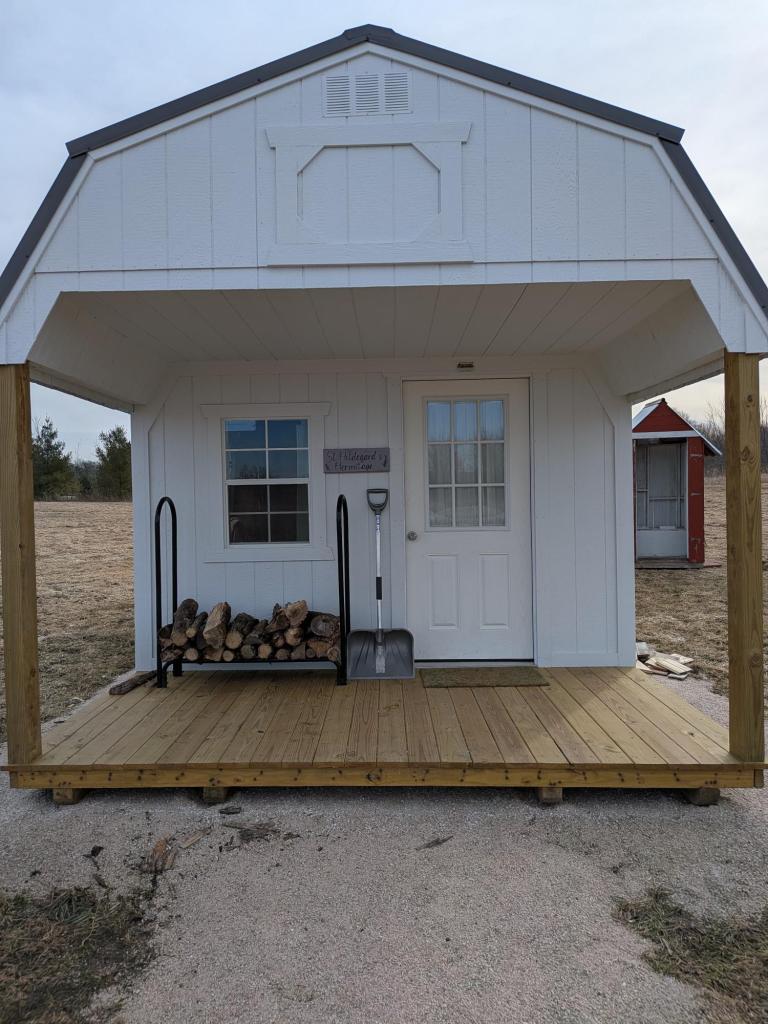
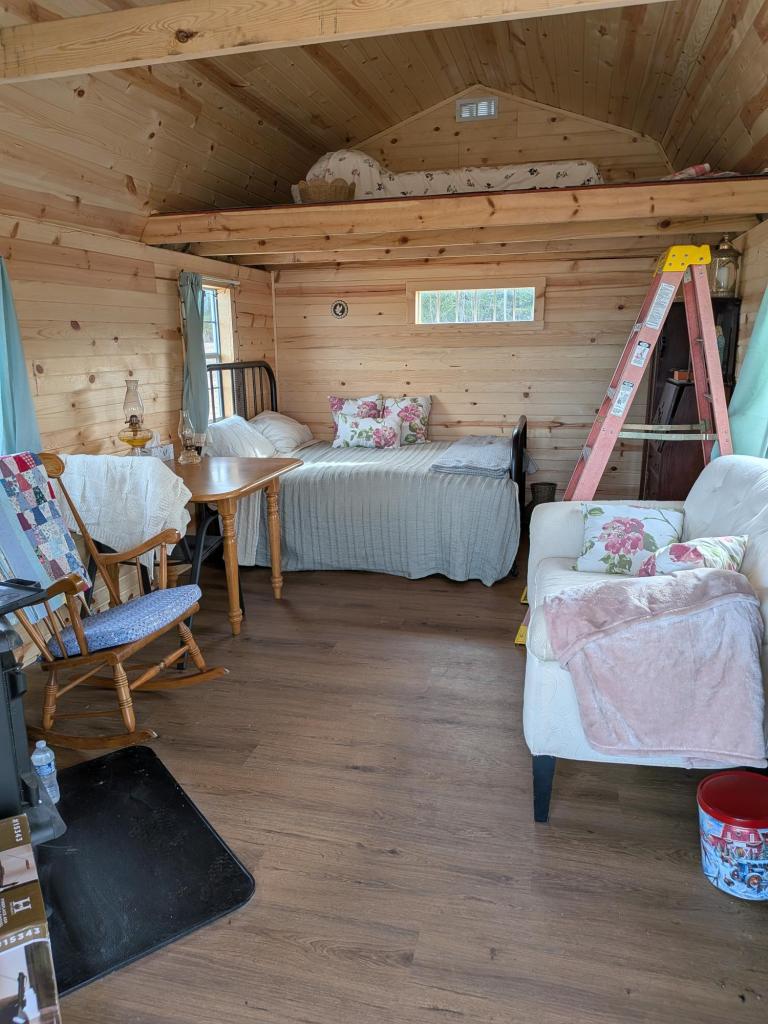
Once the shed was installed, we got to work on the inside. I mostly worked on it one or two days a week for a few weeks, as I had other responsibilities to care for between the kids and the garden harvest. We insulated and finished the walls and ceiling with tongue-and-groove boards, and sealed everything with a clearcoat. We used vinyl flooring for easy cleaning, and installed a fire board and had a woodstove installed. There are still a few finishing details, but right now it’s fully functional. We furnished it mostly with free furniture from family and strangers. As I began to assemble everything and spend some time out there, I knew I needed to have it be a little cozier than any hermitage or poustinia, but simplicity has been the rule.
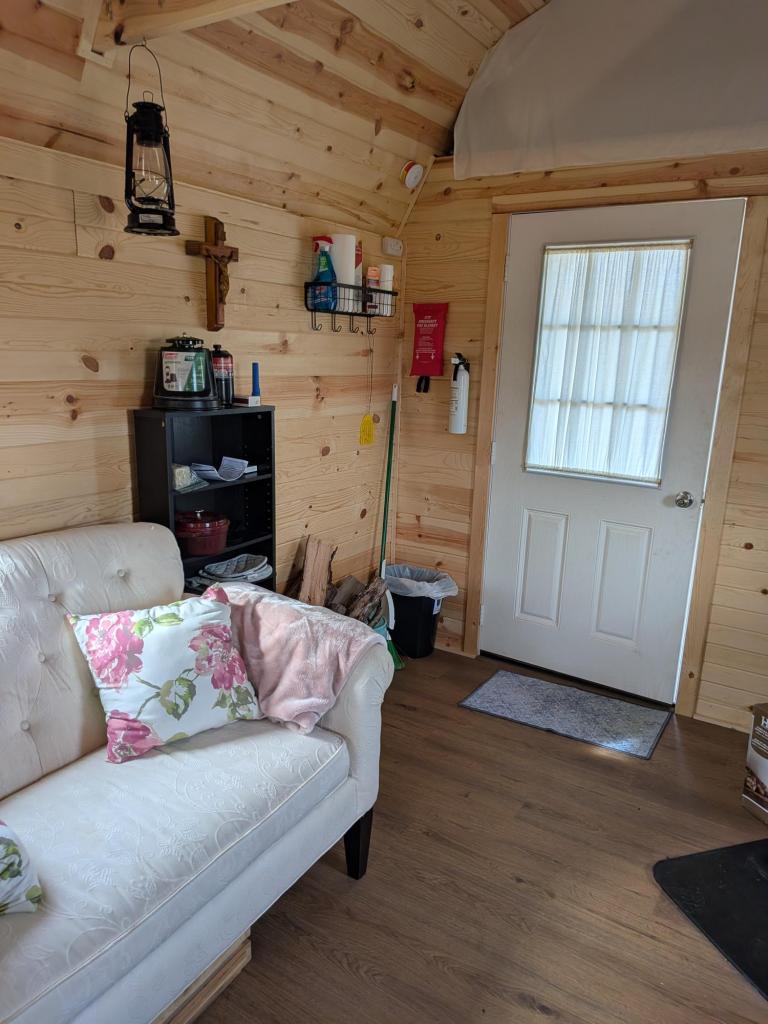
After we got the inside of the cabin finished, and before anyone spent the night back there, I asked our priest to come and bless the cabin. During the process of working on the cabin, I was reading St. Hildegard’s biography, a saint whom I had grown very interested in throughout the months prior, and I found out that she lived as a hermit or an anchorite. Seeing as I wanted this cabin to reflect the simplicity of a hermitage and create a place where one can pray and contemplate God, I decided to christen the cabin “Hildegard’s Hermitage.” In the coming years, I hope to plant a few fruit trees nearby, some basket willow (basket weaving was a skill hermits and poustiniks sometimes used to trade for food or other necessities), we’ll plant some more trees around it to help give it a more secluded feel (as we did not end up placing this in the woods like we originally thought we might), plant a few perennial herbs that Hildegard would have used, and we may install a hand-pump for water. There’s already an outdoor firepit for cooking in the summer, and an outhouse that we moved from elsewhere on the property since it wasn’t being used in that location.
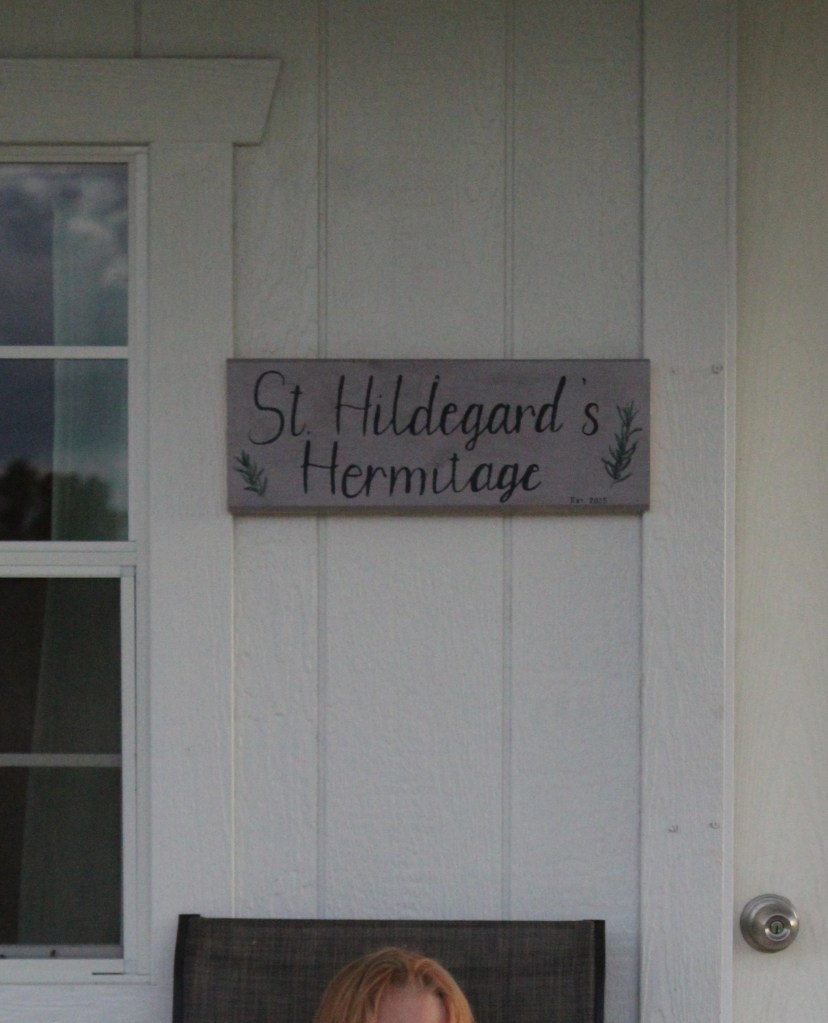
The first time I spent the night back there, I was still undecided as to how I wanted to use it, but as I sat there praying, I realized that my version of simple didn’t need to be as simple as the poustinia. The cabin is off-grid: no electricity, no running water, no air conditioning or internet. It’s quiet and free of most of the distractions we are used to. That is unnerving for most people. That’s more silence and stillness than most people are able to fathom. Even if the time in the cabin isn’t spent all in prayer, we are in desperate need of silence as a society today. Silence to read a book instead of scrolling social media, silence to truly rest instead of numbing ourselves with television, silence to hear our own thoughts rather than the blare of the radio. The silence of a building free from electronics is different from a house that is “asleep.” If I wake at 2 in the morning and the house is quiet, I still hear the hum of the refrigerator and the heating or air conditioning clicking on and off. Sometimes I hear snoring or a child talking in their sleep. I want friends and family to be able to use this space, too, but I think if I created a poustinia as Catherine describes in her book, most would not be able to handle the silence and barrenness. We have to learn to be content in a space that is comparatively bare to what we are used to.
Our intention is not to open it up to a wide “audience,” so to speak. Our immediate family gets first request of use of space, and extended family and friends can request to use it. While we don’t have a specific schedule planned, we’ll be setting limits on how often people can use the cabin, since our land is used for other purposes, some of which can be quite noisy. We don’t intend to rent it as an Airbnb or a retreat space (though the latter may happen if we feel God is calling us to it). Having needed a place to go for quiet time alone, I know that to have a place such as this to go (for free, no less) is priceless. I want to be able to bless our family and friends with that possibility, and I pray that they are able to grow closer to Christ in the process. As it’s set up right now, we could allow up to 4 people to spend the night back there (tightly, though three would probably be more comfortable), and I think it would be reasonable for a person to spend up to 3 nights, though I think that 1-2 nights is likely the most practical for our family and friends. One added benefit of our location is that we are within 5 minutes driving distance to the local Byzantine monastery, our Roman Catholic parish is just a two-minute drive away and our sister parish is only about 5 minutes away, so if somebody wanted to go and pray at a church or chapel, they’d certainly have a reasonable ability to do so most days of the week.
The hermitage has dishes for cooking and serving food, a small writing cabinet with some first-aid supplies, miscellaneous items that may be appreciated (like chapstick and toothbrushes), and a few religious books, as well as a dictionary, a Book of the Hours and a Bible, and some writing supplies. There are curtains made from scrap materials I had on hand, to give extra privacy if so desired, and a coat rack to help keep things free of clutter. Right now, we keep a case of bottled water under the bed, along with a dish tub and some soap for cleaning up, and there are plenty of blankets if it gets cold. We use kerosine lamps for lighting, the woodstove for heat, and have a small, battery-powered fan that lasts for hours, in the event it is too hot (I used it while we worked on the inside of the cabin throughout the summer), though a cross-breeze works pretty well for keeping things comfortable.
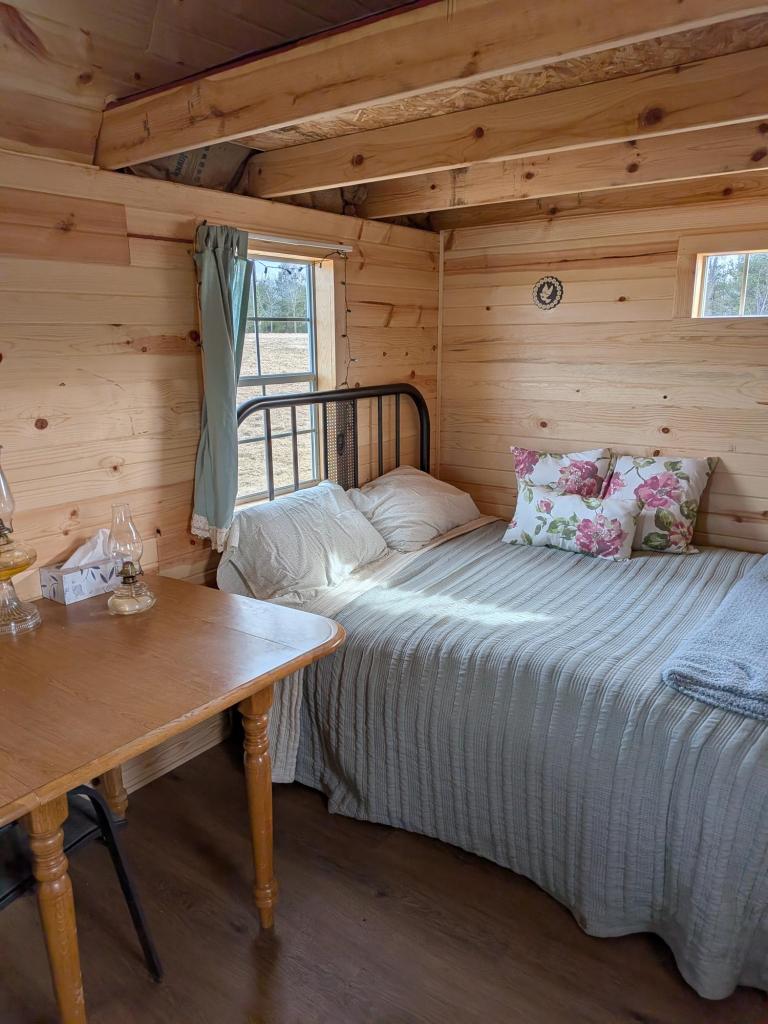
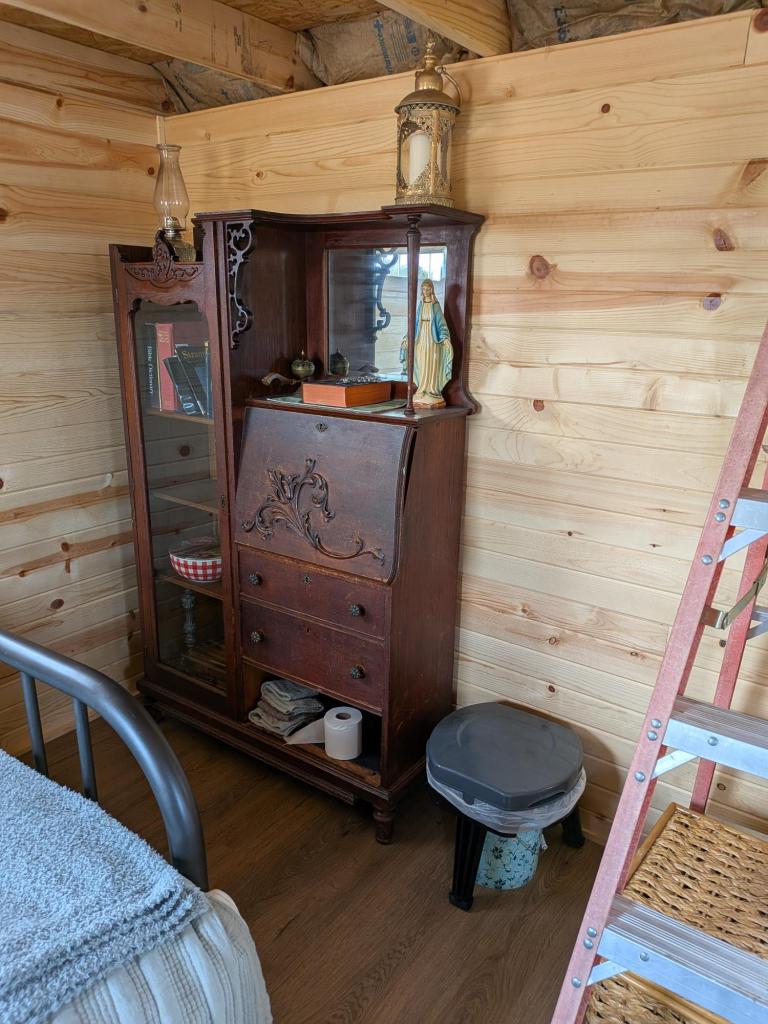
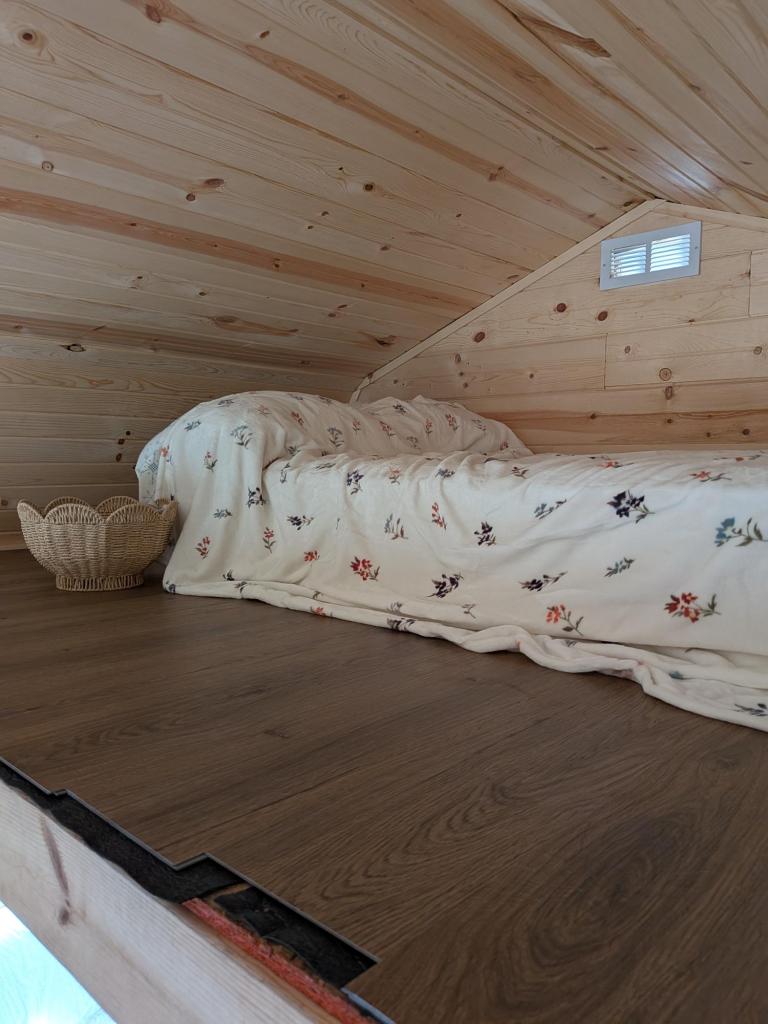
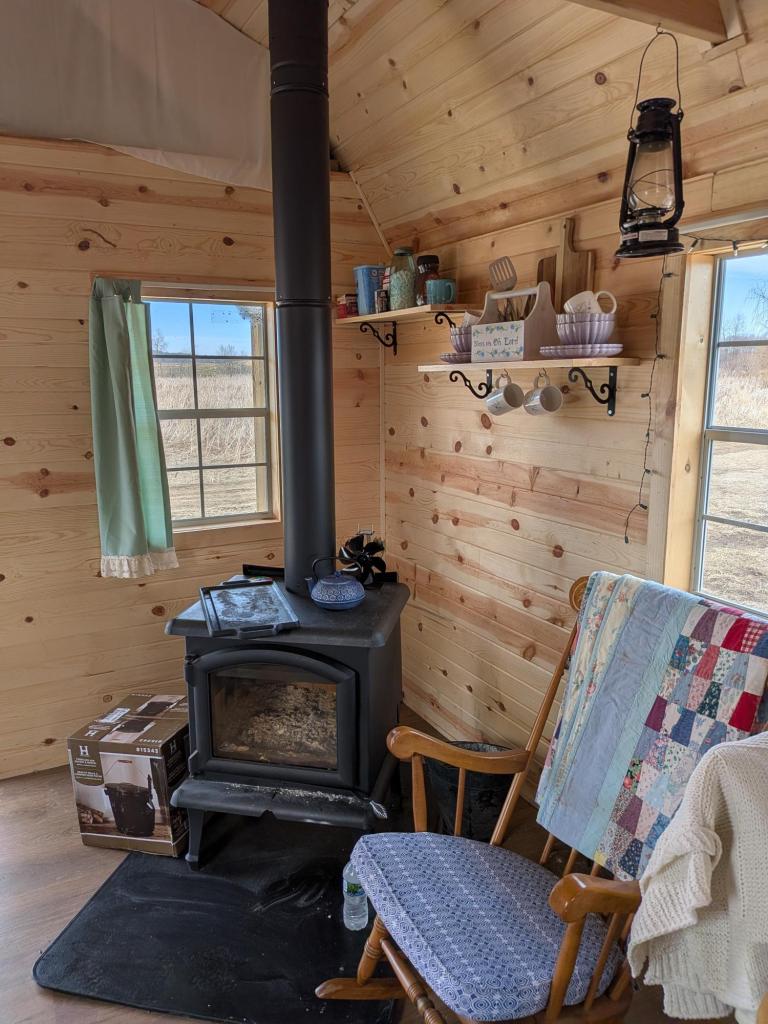
We’ve accumulated supplies throughout the years that would serve us well when we decided to put the cabin up on the property. Many things, like the bed and the writing cabinet, we were able to get free. We’ve built up a collection of kerosene lamps throughout the years, as well as other odd supplies for off-grid living, in the event something goes wrong, like an extended power outage. We built the outhouse with scrap material years ago so I would have a place to go to the bathroom when working out in the fields, but it hadn’t been used much recently, so we moved it next to the cabin. Other supplies, like most of the blankets and pillows, I acquired in the months leading up to the cabins arrival, and nearly all were purchased at steep discounts, and I was able to use fabric from my stash to make curtains and pillow covers. We actually had a woodstove in storage for years that we could have used, but after assessing the space, decided to get a new one, but purchased the clearance model from the store. We hired my dad to install the woodstove, but the rest of the work was done by us. There are actually two lofts in the cabin: one above the queen bed, and one above the porch. The one above the porch is used for storing additional supplies.
We debated using recycled materials on the inside walls of the cabin, but opted not to because we were not sure we could find enough, and we went with wood as opposed to drywall because there is no power source by the cabin, so all work was done with battery-powered tools. The vinyl flooring was chosen for cost-effectiveness, because it’s waterproof, and because it doesn’t require a vacuum to clean. The small rug by the door can be shaken out to get most dirt off, or taken to the house to be washed as needed. I’m still developing a routine for “shutting down” the cabin; floors swept, garbage out, toilet emptied, dishes washed…
Since we’ve gotten it mostly settled, I’ve spent some time back there alone, but also with a couple of the kids, one-on-one, an hour or two with my dad after he finished installing the woodstove, and a few hours with my husband. Just having a place to be present to another person without distraction is something that is sorely lacking for people today. At a restaurant, servers and the conversations of strangers tend to interrupt, and some of the places suitable such a visit are limited in access by weather (such as a beach). The time with others has been very fruitful and a great blessing, and the time spent alone has afforded me an incredible amount of time to think, write, and pray. It’s amazing how many thoughts you can process in an hour, how much you can speak to God, or how fast you can read without distractions!
Remember, it took a full decade before we were able to make this dream a reality! The world needs more spaces like this, and I would encourage homesteaders with the space to consider creating spaces like this. I understand that not everyone will have the space, resources, or time to make something like this happen on our homestead. It’s also just not something everybody will be called to do. But for those called to it, it could be done in many different ways, at many different levels, and in many different locations. Though the project is mostly complete, I am still praying over this, asking God to enlighten me to anything particular He would like us to do for His glory and the good of His people.
I’d love to know if this is something you’ve ever thought of doing on your homestead! Let me know if you have any questions about where we purchased the cabin or anything else about the process!
In Christ,
Danielle
 The Liturgical Homestead
Leave a comment