As the Spring Ember Days arrive, we pray for the bees and the flowers that will begin to appear. Observed the Wednesday, Friday, and Saturday after Ash Wednesday, the Church fasts and prays for the good of these parts of Creation. Both bees and flowers are necessary for the production of beeswax, which is used for the candles we use in worship. Traditionally, candles for worship were made of beeswax, though today it is not a requirement to have beeswax in our candles. The specific requirements vary from place to place, but I believe that fairly consistently, if candles are being used, the requirement is a minimum of 51% beeswax to other waxes, typically paraffin.
In our worship as a Church, candles are used as a symbol: the light they produce is symbolic of our faith, and also are a standing reminder of our prayers. A steady flame of light reminds us that Christ is our light, and also that we are meant to be light to the world, but they also continues to “hold” our prayers as we go about our day.
The Church doesn’t just recognize the importance of bees or flowers for the sake of candles, but because they are a help to us in so many ways. Flowers beautify the world around us, and often adorn our places of worship (though not during seasons like Lent), but they also provide food to creatures beyond the little honey bee. Many insects, birds, and bats feed on the nectar of flowers, and each of these creatures has its place in the lifecycle that plays out around us and also helps to sustain us. Bees produce honey, which Sacred Scripture refers to often. Psalm 119:103 is often quoted in reference to the goodness and sweetness of God’s word. “How sweet are your words to my taste, sweeter than honey to my mouth!” Bees produce honey abundantly, and a good beekeeper knows how much honey to remove from the hive to keep the bees alive and still feed himself and others.
In addition to all of these beautiful reasons which we pray for the bees, the bee is often used as a symbol of the Virgin Mary. Diligent, hard working, and well-ordered, the little bee shares these attributes with our Blessed Mother. The worker bee is also a symbol of virginity, since they do not produce the offspring of the hive, only the drones and the queen, and Mary is well-known for her purity and innocence- her virginity. Docile to the working of God, she has been incredibly fruitful in providing nourishment and raising up the faithful to know and love the Lord. From her, we can learn how to love and serve God, and likewise, we can from the witness of the bee.
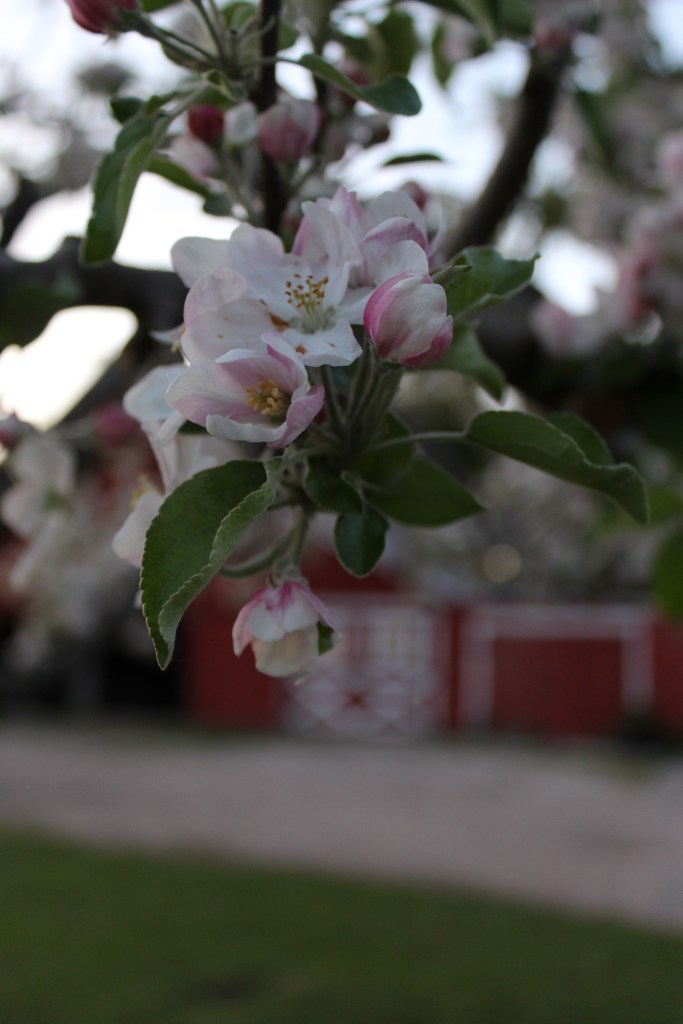
Bees do not feed from all flowers, however. As scientists continue to study and learn about Creation, they discover all kinds of amazing things about the order of it all. Bees have the ability to see ultraviolet light that is on flowers that the human eye cannot detect, these bits of color act as a landing strip for the bees, directing them to the pollen. This is just one of the ways in which God created the bees for the flowers and the flowers for the bees. Many of the native wildflowers, perennials, and fruit trees provide a feeding ground for the honey bee. They often feed on plants which are used for medicinal purposes, and without them, we would lack many of the traditional remedies for various ailments. Bees were important to St. Hildegard who raised physic gardens for medicine, and use honey in many of her remedies. Honey itself has many healing properties, and is often even recommended in modern medicine to help with ailments such as sore throats.
When I was once asked to speak for the local Rural Life Day event with a good friend, I wrote and rewrote what I might say about how my faith and homesteading intersect. I had only just begun to flush out the idea of “liturgical homesteading,” but as I sat there pondering what I might say, I thought about how similar homesteading and the Catholic faith truly are. One thing in particular really struck me- that both are incredibly seasonal. The Church is well known for the liturgical calendar and seasons (Advent, Christmas, Lent, Easter, and so on), and anyone who works the land will tell you how important it is to respect and observe the seasons of nature. We must work with them if we wish to produce fruit. But the Church also observes and respects the natural cycles of the world, most notably in the Ember Days when we observe the passing of the seasons.
During the Ember Days, we pray for God’s blessing on our labors, the fruits of Creation, and we pray for vocations to the priesthood. Ember Days were traditionally times of ordination to the priesthood. We reflect on Christ’s passion, as well. The Ember Days are penitential in nature, and so we fast as well, asking God for mercy. The spring and winter Ember Days are probably easiest for the lay person to keep if they already observe the penitential nature of Advent and Lent (these days are heightened days of penance, even among the penitential seasons), though the summer and autumn days may be easier to miss if we do not mark our calendars.
If you would like to pray with the Church through these days, you can use the prayers below. In addition, be sure to pray specifically for the bees and the flowers!
Prayer:
Antiphon: Bless the Lord, O my soul, and never forget all He hath done for thee.
V. Lord, Thou has been our refuge.
R. From generation to generation.
Let us Pray: Grant, we beseech Thee, almighty God, that as year by year we devoutly keep these holy observances, we may be pleasing to Thee both in body and soul. Through Christ our Lord. Amen.
In Honor of Christ’s Betrayal and Passion
O God, Who for the world’s Redemption was pleased to be born, circumcised, rejected by the Jews, betrayed by the kiss of traitor Judas, bound with chains, led like an innocent lamb to sacrifice, and shamefully presented before Annas, Caiphas, Pilate, and Herod, accused by false witnesses, beaten with whips, buffeted, insulted, spat upon, crowned with thorns, smitten with a reed, blindfolded, stripped of Thy garments, fastened with nails to the cross and lifted up on high, reputed among thieves, made to drink gall and vinegar and wounded by a lance; oh, by these most sacred sufferings, which, unworthy as I am, I thus commemorate, and by Thy holy cross and death, deliver me, Lord, from the pains of hell, and deign to lead me where Thou didst lead me where Thou didst lead the penitent thief, who was crucified by Thy side. Who, with the Father and the Holy Ghost, livest and reignest, forever and ever. Amen.
Our Father, Hail Mary, Glory be to the Father, etc. five times.
Prayer for God’s Blessing on our Labors
O Lord, graciously look down upon Thy servants and upon the work of their hands, and do Thou, Who givest food to every creature, bless and preserve the fruits of the earth, that the needy may be filled with good things and that all may praise the glory of Thy bounty. Through Christ our Lord. Amen.
For Vocations to the Priesthood
Antiphon. Why stand ye all the day idle, go ye into my vineyard.
V. Ask the Lord of the harvest.
R. That He send laborers into His vineyard.
Let us Pray God, who willest not the death of the sinner, but rather that he be converted and live; grant, by the intercession of blessed Mary ever Virgin and of all saints, laborers for Thy Church, fellow laborers with Christ, to spend and consume themselves for souls. Through the same Jesus Christ, Thy Son, Who liveth and reigneth with Thee in the unity of the Holy Spirit, forever and ever. Amen.
In Christ,
Danielle
 The Liturgical Homestead
Leave a comment