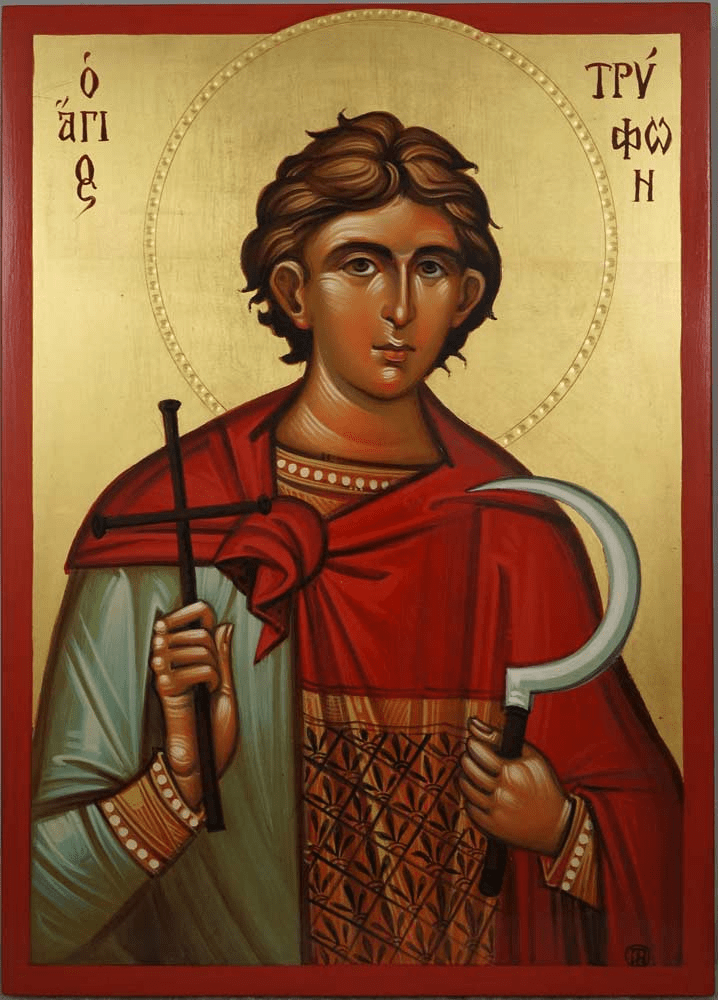
While many of us begin to think of hearts and love or the importance of marriage as February 14th draws near, some begin thinking of grapevines and wine. February 14th isn’t just the day we remember St. Valentine, some in the Church remember the feast of St. Tryphon, the patron saint of vinedressers and wine makers. (* February 14th is the O.S. date of his feast, while February 1st is the N.S. Many places still observe the 14th as his feast day. If you are already doing blessings for springs or wells on Feb. 1st, you might decide to combine days of blessing, or perhaps choose to spread out the love and the work, by blessing your vines on the 14th.)
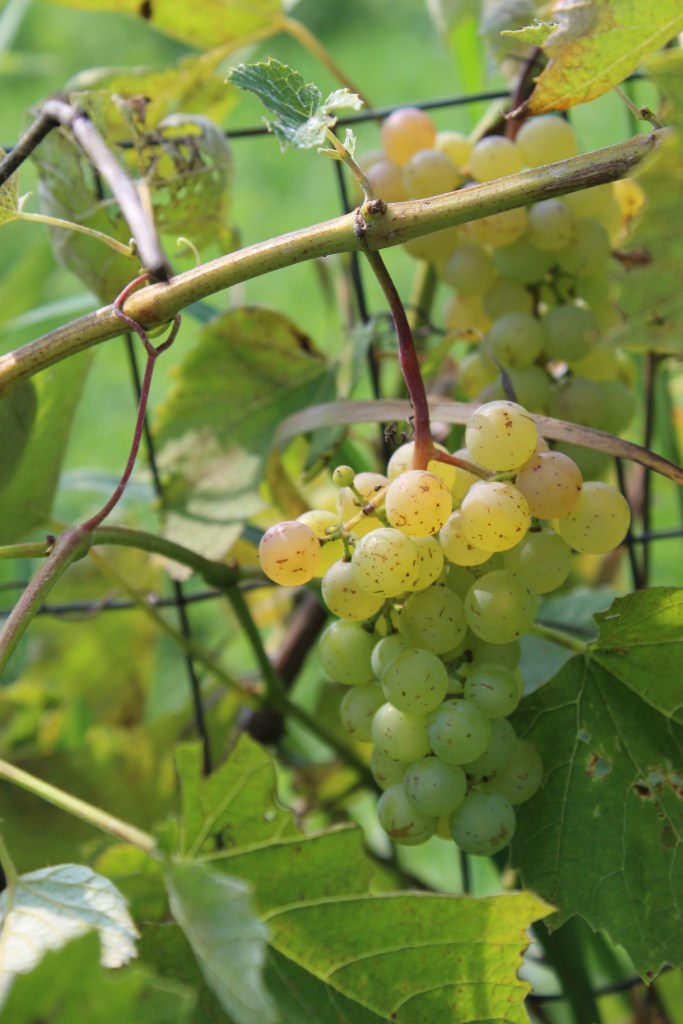
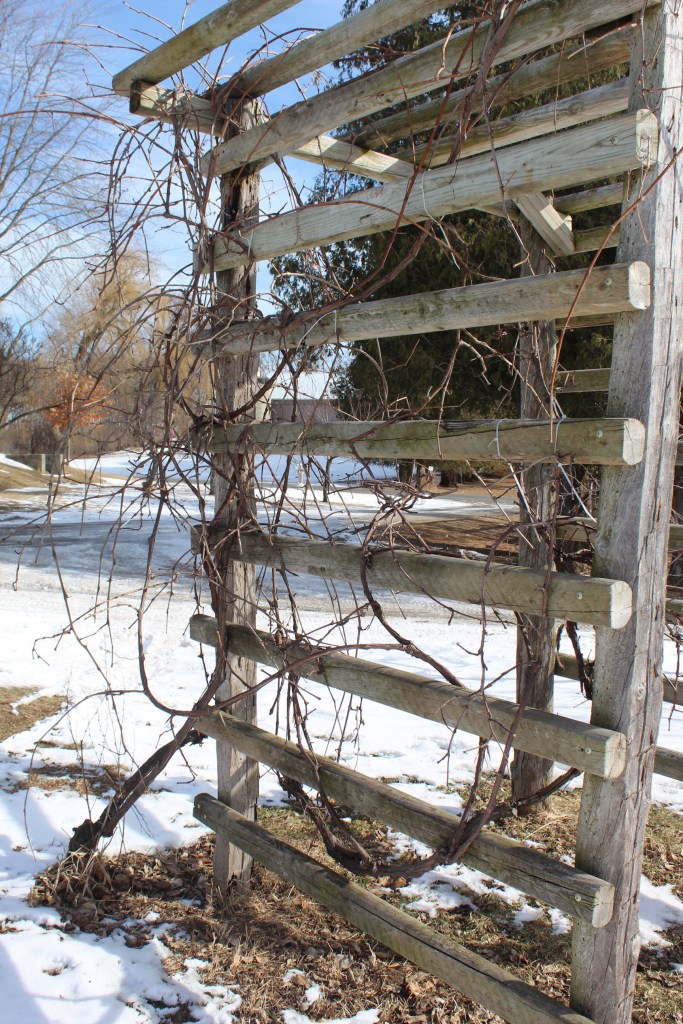
For the last several years, I’ve used St. Valentine’s day as a reference point for when I need to start thinking about our maple syrup operations. By the end of February or beginning of March, our trees need to be tapped for the sap that comes with warming weather, but we need to start thinking about this production in advance so we can make sure we have all of the supplies we need. I will still use this as a reference point for when to prepare for sap boiling, but this year and in the future, I will also be turning our attention to our grapevines. (Someday, I hope to have more than two!)
From Phrygia, St. Tryphon was born during the mid 200s. He was well-known for miracles of healing, including the healing of the empress’s daughter. Eventually, he was beheaded for being unwilling to denounce Christianity, under the persecution of Decius. He is known as patron of winemakers and vinedressers because he is said to have repelled a plague of locusts from a vineyard. The grape farmers were, of course, grateful for the protection that Tryphon provided. For this reason, he one of the primary patrons of vinedressers and winemakers.
Especially celebrated in the Eastern Church and in places like Serbia and Bulgaria, St. Tryphon’s day is a day for the blessing of grapevines. It seems that some places discourage this date for pruning as it is a day for celebrating though it marks the beginning of the pruning season for the vineyards, while other places do prune the vines this day. No matter the location, the primary custom of this day is to sprinkle the vines with wine during the blessing of the vines.
I tried to find the formula for blessing that would be used in Bulgaria, the Balkans, or other areas that commonly celebrate this feast day, but I could not find the prayer they use. (If you happen to know it, drop it in the comments!) There is a prayer for vines from the Catholic Rural Life Prayer Book, which can be found archived on EWTN. If you did the blessing over your apple trees or orchards on the 6th or 9th of February, then this prayer will be familiar!
BLESSING OF ALL KINDS OF FRUIT TREES AND VINES
V. Our help is in the name of the Lord.
R. Who has made heaven and earth.
V. The Lord be with you.
R. And with your spirit.
Let us pray.
We beg You in Your goodness, almighty God, to pour the showers of Your blessing upon these newly budding trees and vines which You have made, and which You have been so kind as to nourish with temperate weather and sufficient rain. Bring the fruits of Your earth to full ripeness. Grant, too, that Your people may always give You thanks for Your gifts, so that You may fill them that are hungry with the fruits of a fertile land and that the poor and the needy may praise the glory of Your name, through Christ our Lord.
R. Amen.
(And they are sprinkled with holy water.)
If you happen to know of a different formula for blessing used for this particular tradition, please, let me know in the comments!
As always, we don’t participate in these traditions for the sake of “doing” more things. The purpose is always to turn our attention back to God, to remind ourselves that all gifts come from God, and that He is the Author of Life. By blessing parts of our homestead, we praise and glorify God and ask for His help in our work. When these traditions are tied to the feast of a certain saint, we are typically reminded of particular miracles or work from their lives, and those miracles show us their faith and love for God and point us back to Him. They remind us that we are part of a Body of believers, and that we can ask for help and prayer from those around us, not just in this physical, earthly life, but those who surround us in the heavenly, spiritual realm.
Sacred Scripture is filled with references to grapes, grapevines, vineyards, and vinedressers. This simple plant has so many lessons to teach us! To understand the grapevine is to better understand Christ’s words “I am the vine and you are the branches,” from John 15:5. In fact, try grafting to a vine out of season, or watch how an unpruned vine fares, and you’ll have a much better understanding of the significance of the importance in remaining rooted in Christ. Surely, St. Tryphon understood this well!
St. Tryphon, pray for us!
In Christ,
Danielle
(P.S. Another saint, Urban of Langres is also associated with vinedressers and vineyards, and his feast day is January 23rd. He lived during the 300s, and converted the vinegrowers of the area while hiding from persecution. There are several other saints for wine, grapes, vinedressers, vintners, wine glasses, and barrel makers. If that is something dear to your heart, I’d encourage you to dig further! These days would all be suitable for blessing your vines, and the prayer above would be suitable, no matter what day you do so!)
 The Liturgical Homestead
Leave a comment