
In my research on liturgical traditions that pertain to the agricultural life, I stumbled on an English tradition that I’d never heard of: Plough Sunday (or Monday). I’ve only done a little exploring of the tradition thus far, but with Plough Sunday soon approaching, I thought I’d best make note of what I’ve come across.

Plough Sunday takes place the Sunday after the feast of the Epiphany, so it can land anywhere from January 7th to 13th. Some places celebrate Plough Monday instead, or in addition to Plough Sunday. From what I can tell, Plough Monday may have come first (though I am not sure). It appears to be medieval in origin, and to be a mainly English tradition that began before the English Reformation (when the Church of England broke from the Catholic Church). If I’m understanding my research correctly, Plough Sunday was the day when the village ploughshare was blessed for the work of the year to come, and Plough Monday marked the start of the agricultural year after the celebration of the 12 days of Christmas. Though Plough Sunday is relatively regional and appears not to have been observed by Catholics for many centuries now, it’s not surprising that it’s not more well-known today, especially since we celebrate the Baptism of Our Lord on the first Sunday after the Epiphany today.
Ploughs (or the American spelling, “plows”) were an expensive piece of equipment and would have been shared by the villagers. The plough was vital for working the land, which would allow the workers to produce food for the year to come. So important was the plough to the community, that a “plough light” was kept in the church year-round. The new candle was lit during the Mass, and parishioners would have donated to keep a candle continually burning. (Since sacramental candles do eventually burn out, the candles were likely replaced throughout the year as needed, and not strictly one candle that burned each year.) Some communities have families bring jars of soil to church for blessing as well. These traditions exist because it is important that we ask God’s blessing in all things, and that the work of our hands would glorify His Kingdom.
Though the technology has changed much in the time since, this tradition is still kept in parts of England, despite the fact that the plough is no longer typically shared communally. Ploughing or tilling is still important for the preparation of soil for many farmers and gardeners, and for families like my own who help others with the work of preparing their soil or lend our tractor and tiller if needed, blessing the “plough” seems to be a wise thing to do! In zone 5 Wisconsin, we won’t be ploughing or tilling anytime soon. The ground will either be frozen solid or too mucky for the next couple of months for most of us to work the ground, but sometimes we forget to do these types of things in the moment. Though the tradition isn’t exactly the same, tractors are blessed during the Rural Life Day Masses throughout the country, but the date of these Masses can be different from year to year and diocese to diocese.
Regardless of whether or not we try to revive an entire liturgy for the blessing of the plough or we simply want to take the time to bless our ploughs, we can take advantage of this day to sanctify the work of the year to come. Though a priestly blessing is different from the blessing of a lay person, we are still able to perform this blessing. If your parish priest is unavailable, this is something that you can do at home according to your convenience. Plough Sunday or Monday also comes with a traditional meal: Norfolk Plough Pudding. There are additional traditions that go along with this day, but the blessing of the equipment that prepares the land is the most pertinent to liturgical homesteading. To learn more about the history and traditions of Plough Sunday/Monday, you can visit The Origins of Plough Monday, by Peter Millington.
Most of the prayers I was able to find come from Anglican sources, but fit the format of many of the prayers used for other agricultural prayers in the Catholic Church. As with most blessings, holy water is a part of the blessing, and is something you will want to have on hand.
Blessing of the Plough
Blessed are you, Lord God of all creation:
for in your abundant care you have given us fertile land,
rich soil, the seasons in their courses.
You provide seed for sowing, water, light and warmth
to bring forth the miracle of growth.
You give us skill to work the land,
to prepare and nourish it, that it may be fruitful.
By your blessing,
let this plough be a sign of all that you promise to us.
Prosper the work of our hands,
and provide abundant crops for your people to share.
Blessed be God, Father, Son and Holy Spirit.
Blessed be God for ever.
God speed the plough.
God speed the plough.
(https://onlyonline.hymnsam.co.uk/cwbooks/timesandseasons/PloughSundayResources.html)
Blessing of Plough
O Holy Spirit, bestow upon all who till the ground wisdom to understand your laws,
and to co-operate with your wise ordering of the world;
and grant that the bountiful fruits of the earth may not be hoarded by the selfish or squandered by the foolish,
but that all who work may share abundantly in the harvest of the soil; through Jesus Christ our Lord. Amen.
O Lord Jesus Christ, you warned your disciples, having put their hand to the plough, not to look back;
Bless this plough and the skill of the ploughman for the service of mankind. Amen.
God speed the plough and the ploughman, the farm and the farmer.
ALL: God speed the plough.
Minister : God speed the plough, on hillside and in valley; on land which is rich, and on land which is poor; in countries beyond the seas, and in our homeland.
ALL: God speed the plough.
Minister : God speed the plough, in fair weather and in foul, in success and disappointment, in rain and wind, in frost and sunshine;
ALL: God speed the plough.
(From : Countryside Matters! Plough Sunday)
Blessing of an Automobile, a Wagon or Tractor
V. Our help is in the name of the Lord.
R. Who has made heaven and earth.
V. The Lord be with you.
R. And with your spirit.
Let us pray.
Lend a willing ear, Lord God, to our prayers, and bless this vehicle with Your holy right hand. Direct Your holy angels to accompany it, that they may free those who ride in it from all dangers, and always guard them. And just as by Your deacon Philip You gave faith and grace to the man of Ethiopia as he sat in his chariot reading the Sacred Word, so, point out to Your servants the way of salvation. Grant that, aided by Your grace, and with their hearts set on good works, they may, after all the joys and sorrows of this journey through life, merit to receive eternal joys, through Christ our Lord. R. Amen.
(And it is sprinkled with holy water.)
(From: The Rural Life Prayerbook | EWTN)
Blessing of the Soil
All the earth is yours Lord. We bring before you this rich and living soil that you may bless us and our land with abundance.
In the name of the Creator of heaven and earth, we dedicate this living soil that it may be fruitful to God’s glory. By the blessing of God, Father, Son, and Holy Spirit, may the land we till and tend bring forth good food in abundance. Amen.
(From: Plough_Sunday.pdf )
On our homestead, we use a large tiller attached to our tractor to prepare the fields for planting, and we have a small hand plow that we use for some of our planting.
Whether you will be plowing and planting soon, or are waiting for months yet, may God bless you in your plowing!
In Christ,
Danielle
P.S. If you’re familiar with this custom, I’d love to hear more about it in the comments! And feel free to correct me if you see any errors!
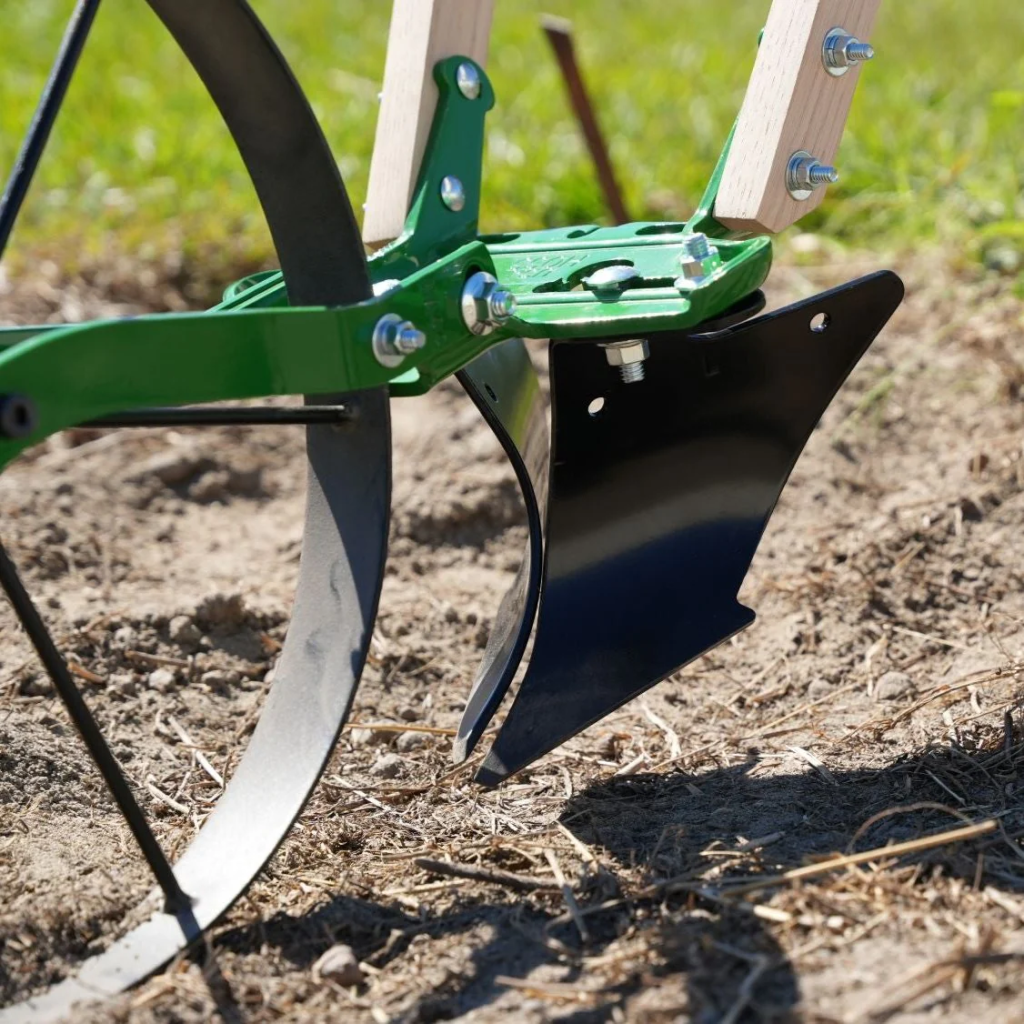
Image from growhoss.com
 The Liturgical Homestead
Leave a comment