
I have recently been studying the history of rosaries and learning about physic gardens in my search for all things liturgical in relation to homesteading. Some of the most solid information we can get on the history of the rosary comes from the middle ages, and boy, did I learn a lot! When I first came across the term “physic garden,” I had to do a double take because I read it as psychic garden! Physic refers to bodily health and healing. Think “physician” and “physical.” A more common term today is an herbal garden or a medicinal garden.
The rosary initially doesn’t appear to relate to homesteading in any significant way, so why did do more investigating? Praying the rosary is considered by many to be a liturgical practice, and if you look into liturgical living, you will see recommendations to pray the rosary. The rosary is a very universal prayer (or set of prayers) among Catholics. Every time we pray it, we participate in a prayer that transcends the bounds of time. What a great “work of the people”! But there were two other reasons I began to investigate. One is that in studying the local history of the Catholic immigrants to this area, I read about how they prayed the rosary at the end of every day. I believe they prayed it in community every morning and night for years, though I’ll have to double check that. These immigrants were essentially homesteaders, though they were part of a Catholic commune (yes, a unique and somewhat strange, but fascinating history), and it was a central part of their days. The final reason I did more research is that I knew some people make rosaries using beans or seeds, which I can definitely grown.
Of the reasons I researched, the third was the most motivating. A year or two ago, I came across a plant called “Job’s Tears,” a grass that produces seeds that look like tear drops. I’m not sure how I stumbled on this plant, but what really caught my attention is that in the description of the seeds, it was stated that they are used to make rosaries. Further reading indicated that in addition to these seeds, beads would be made from wood, the more valuable wooden beads coming from the boxwood plant. I have two bushes on the property, and though I would not be able to harvest the wood for bead making at this point in time, I may eventually be able do so.
One of the materials used to make beads was bone. I was initially somewhat shocked by this, but bone beads are not uncommon and still manufactured today. Though bone rosaries are less common today than they once were, they still can be found. For those who find the idea of bone as odd or disturbing, it would be similar to using ivory for beads, and it is a way to use all of the parts of an animal. The bones cannot be boiled, and they need to be thoroughly cleaned and de-greased to keep them from becoming brittle or developing an odor.
While I won’t be making beads from wood anytime soon, I do hope to try my hand at it some day. I am toying with the idea of making bone beads sometime in the fall or winter when I have more free time. But the seeds I can do and do now! A week ago, I planted the Job’s Tears, and I am looking forward to trying my hand at making a few rosaries with the seeds we harvest!
If you’d like to read more on the history of the rosary during the medieval period, try to obtain a copy of Chris Laning’s “Bedes Bydding.” I had a hard time locating a copy, so if you need help, reach out and I will connect you to a resource. The work is essentially a booklet, and only cost a few dollars through the source I located. I found it to be very interesting reading.
And now to the physic garden…
I began exploring medicinal gardens due to their ties to monastic life and the corporal work of mercy to visit (and care for) the sick. Though herbs have been used since time immemorial for their healing properties and to flavor food, medicinal gardens as we know them today date back to the middle ages and received significant development due to monasteries. St. Benedict in particular played a big role in their development because of the rule for the care of the sick. Monasteries were places where knowledge was exchanged and built up because they were places of hospitality (where we get the term hospital), and as a result, knowledge of different herbs and their properties grew. Seeds and plants were given and received, or spoken of and then sought out.
If you search the term “physic garden,” you will encounter the name Hildegard von Bingen. Hildegard lived from 1098-1179 and was canonized a saint by Pope Benedict the XVI in 2012. She is quite an enigmatic figure, and if you read her writings today, much of it will seem strange, but it must be understood in the context of medieval knowledge during her life-time. It does not take away from the truth contained within her writings, and it is also important to recognize what a significant impact she had on modern medicine and our current understanding and knowledge of herbal healing.
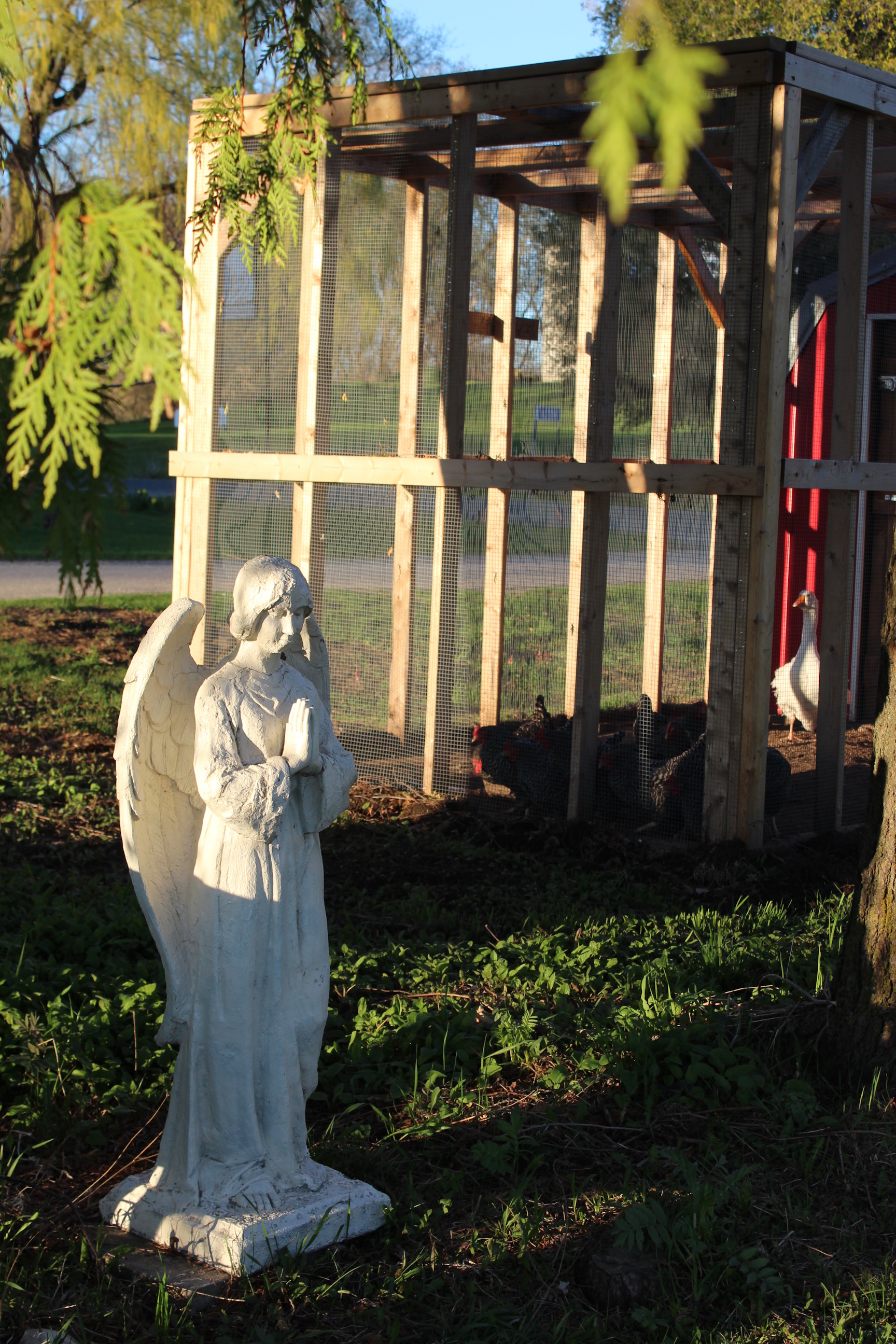
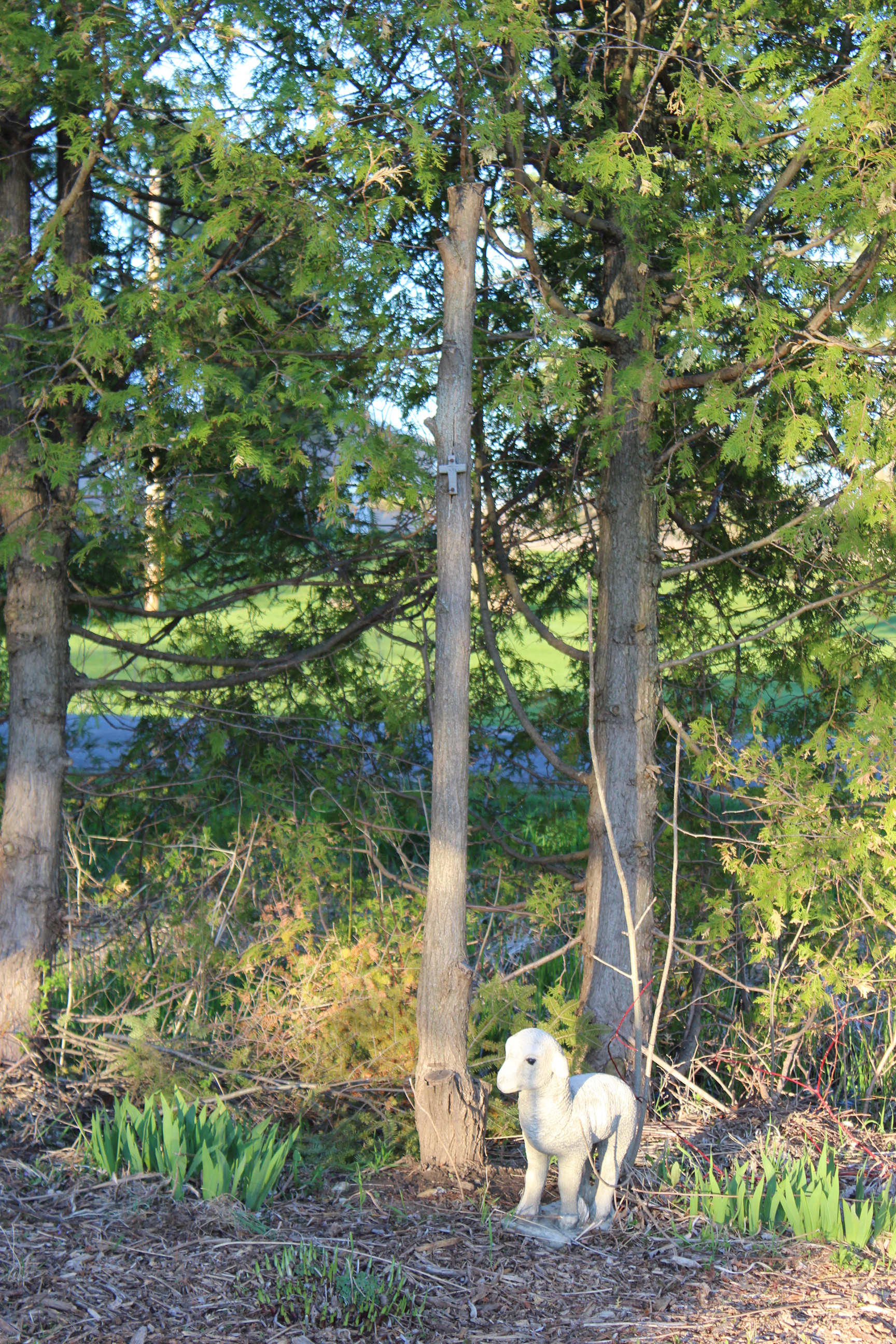
For our homestead, we will be gradually increasing the extent of our herbal garden and I do want to create an intentional physic garden. We have a garden on the property that we’ve always referred to as the Secret Garden because when we moved here, it was overgrown and hidden. Today, you can see what is contained within this area, but the name has stuck. Several years ago, I switched from growing primarily flowers to growing more herbs and foods in the space. A few years ago, I decided to make this a prayer garden, and we incorporated an angel statue. Two years ago, we put up The Way of the Cross on the property, and the final station ends in the garden. We bought a statue of a lamb that was placed under the station to represent Christ as the lamb. This year, we are going to continue to shift towards a more medicinal herbal garden. I’m starting with what I know we’ll use and what can be purchased locally. Next year, I’d like to purchase more seeds or plants that cannot be found easily here, and continue the expansion.
St. Hildegard’s writings on the use of herbs are by far the only ones we can look at to learn and grow in our understanding. God has taken care of all of our needs, and much is still being uncovered to this day! I have several other books on healing herbs that I will be looking into. Jekka McVicar’s “100 Herbs to Grow” has quite an extensive list of herbs with their properties and information on how to grow the various plants. The one thing to be aware of as you do any research on herbs is that there is a good amount of occult writing on the subject. Though the knowledge of the property of herbs is not limited to the Christian or even Abrahamic religions, and we can learn from others, we should always stay mindful of the purposes people have in using these things, and what might be spiritually attached to their work.
I will write further about growing Job’s Tears and any rosary projects we may undertake, and I will update on our physic garden as time goes on. And if you have a physic garden or produce rosaries with supplies from your homestead, I would love to hear about it!
In Christ,
Danielle

 The Liturgical Homestead
Leave a comment